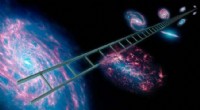
Orphan supernovae are rare, but they have been observed by astronomers in several different locations in the universe. In 2005, a team of astronomers from the University of California, Berkeley, discovered an orphan supernova about 100 million light-years from Earth. The supernova, named SN 2005E, was found in a region of space that was completely empty of galaxies.
SN 2005E is thought to have been the result of a massive star that was ejected from its galaxy early in its life. The star wandered through intergalactic space for millions of years before eventually exploding in a supernova.
Orphan supernovae are important because they provide insights into the lives and deaths of massive stars. They also help astronomers to learn about the intergalactic environment and the formation of galaxies.
Here are some additional facts about orphan supernovae:
* They are typically very bright and can be seen from great distances.
* They can provide clues about the early history of the universe.
* They may be a source of heavy elements, which are essential for the formation of planets and stars.
Orphan supernovae are a reminder that the universe is a vast and mysterious place. There are still many things that we do not know about the origins and evolution of stars and galaxies. However, by studying orphan supernovae and other astronomical phenomena, we can learn more about the universe and our place in it.