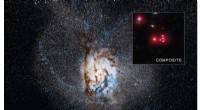
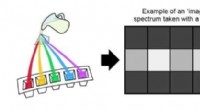
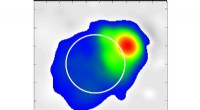
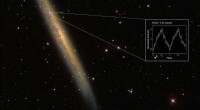
The planetarium show focuses on infrared astronomy and the capabilities of SOFIA, a joint project of NASA and the German Aerospace Center (DLR). The aircraft is equipped with a 2.5-meter reflecting telescope and various infrared instruments. During the flight it can study phenomena in the most distant corners of the milky way, the infrared light of which cannot reach earth because of the water vapor in our atmosphere.
Active stereo 3-D projections are still fairly new in the field of planetariums, with the first-ever active stereo show premiering in Jena in early 2016. The active stereo technology from Carl Zeiss enables visitors to experience three-dimensional images of celestial objects in their full splendor.
“The new production technique used in this show is a game-changer,” says Dr. Matthias Viehmann, head of the Jena Planetarium. “Thanks to a novel animation technique we can now produce stereoscopic content in a fraction of the time and at a fraction of the cost of conventional approaches. There are almost no limits to our creativity – we can bring objects to life in the planetarium dome and even create scenes with a huge depth of field.”
Dr. Viehmann adds that the new visualization capabilities give planetariums a powerful new tool for communicating complex concepts to the public. Active stereo 3-D makes a significant contribution to understanding the nature of celestial bodies and the processes governing the universe by providing the visitors of a planetarium with an immersive experience as close as possible to observing the real universe. “A visit to the planetarium is a unique learning experience,” says Viehmann. “People are fascinated by the size of the universe, want to learn about its origins, and discover what it holds for us. With the new possibilities of 3-D full-dome visualization we create an awe-inspiring experience that not only excites young people, but appeals to all generations.“
To produce the show, Carl Zeiss relied on the high-performance computing power of the Visualization Lab within its visualization cluster. The supercomputer consists of 10 computer nodes, each of which incorporates two Intel Xeon E5-2698 v4 processors and a NVidia Quadro P6000 graphics adapter with 24 GB of memory. With this power, high-resolution images and sequences are visualized without noticeable frame drops and can then be exported and viewed in the Zeiss “VR One” media player application for stereoscopic full-dome projections.
The production team also made extensive use of a virtual reality solution to plan the show’s camera movements and perspectives, create 3D models, and place them within the virtual scene. This workflow not only accelerated production, but also contributed to the quality of the final product, according to Dr. Viehmann. “Working in virtual reality allowed the creators to fully immerse themselves in the project, enabling them to make informed assessments on various aspects of the creative process. This ultimately led to a result that is highly engaging for the viewer.”
Availability: The new planetarium show about the SOFIA mission is available for planetariums worldwide from September 2018.