1. Brightness: Kepler's Supernova was incredibly bright, outshining the planet Jupiter in the night sky. Historical accounts describe it as being visible during the daytime and casting shadows at night. Its apparent brightness indicates a high luminosity and energy output.
2. Duration: Kepler's Supernova remained visible to the naked eye for an exceptionally long period of 18 months. Most supernovae fade from naked-eye visibility within a few weeks to months, but Kepler's Supernova persisted for over a year, indicating a sustained high energy output.
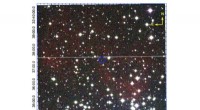
3. Remnant: The remnant of Kepler's Supernova, known as SN 1604, is still visible today as a bright nebula in the constellation Ophiuchus. The size and brightness of the remnant suggest a powerful explosion that ejected a significant amount of material.
4. Light Echo: Kepler's Supernova produced a light echo, a phenomenon where the light from the supernova is reflected off of interstellar dust clouds, creating a series of expanding rings of light. These rings have been studied by astronomers and provide further evidence of the supernova's extreme brightness and energy release.
5. Impact on Solar System: There is some evidence that Kepler's Supernova may have had an impact on the Solar System. Elevated levels of beryllium-10, a radioactive isotope produced by cosmic rays, have been found in ice core samples dating back to the time of the supernova. This suggests that the supernova's shockwave reached the Solar System and enhanced the flux of cosmic rays.
While it is difficult to quantify the exact energy output of Kepler's Supernova, these factors taken together strongly suggest that it was an unusually powerful and energetic supernova that has left a lasting impact on astronomical observations and research.