A new study has revealed why some galaxies stop creating stars. The findings, published in the journal Nature, could help astronomers better understand the evolution of the universe.
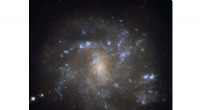
Galaxies are constantly forming new stars. This process is driven by the collapse of gas clouds under the force of gravity. As the gas collapses, it heats up and begins to glow, forming a new star.
However, some galaxies eventually stop forming new stars. This is thought to be caused by a number of factors, including the lack of available gas, the presence of a supermassive black hole, and the aging of the galaxy's stars.
The new study, led by researchers at the University of California, Berkeley, focused on the role of supermassive black holes in quenching star formation. Supermassive black holes are found at the centers of most galaxies. They are thought to be formed by the collapse of a large amount of gas and dust.
As supermassive black holes grow, they can accrete gas and dust from their surroundings. This process can heat up the gas and dust to such high temperatures that it prevents it from collapsing and forming new stars.
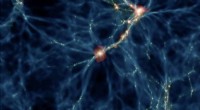
The researchers used computer simulations to model the effects of supermassive black holes on star formation. They found that supermassive black holes can effectively quench star formation in galaxies that are already in the process of decline.
"Our findings suggest that supermassive black holes play a key role in the evolution of galaxies," said study lead author Norman Murray. "They can help to explain why some galaxies stop forming stars and eventually become dead."
The study's findings could help astronomers better understand the evolution of the universe. By understanding the factors that quench star formation, astronomers can better track the history of galaxies and the universe as a whole.