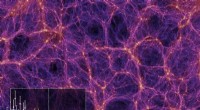
1. Galaxy Formation: Galaxies originate within the filaments of the cosmic web. Dense pockets of gas and dark matter, known as galaxy protoclusters, collapse under their own gravity. As the protocluster grows, it fragments into smaller clumps that condense to form individual galaxies. This process is influenced by the dynamics and gravitational forces within the filament.
2. Filament Feeding: The filaments play a crucial role in fueling galaxy growth. Gas reservoirs, often referred to as "filamentary gas," flow along these cosmic pathways, providing the raw material for star formation within the galaxies. This flow of gas enables continuous galaxy growth and sustains star-forming activities.
3. Tidal Interactions: As galaxies reside in close proximity within filaments, they experience gravitational interactions with each other. These tidal forces can induce various morphological transformations in galaxies, shaping their spiral arms, triggering galaxy mergers, and leading to the formation of peculiar galaxy structures.
4. Starbursts: The rich gas supply in filaments can lead to intense star formation episodes, often referred to as starbursts. These bursts of star formation give rise to luminous, young galaxies that contribute to the overall luminosity of the cosmic web.
5. Galaxy Mergers and Interactions: The dynamic nature of the cosmic web often brings galaxies into close encounters or even collisions. Galaxy mergers, an integral part of galaxy evolution, play a significant role in the creation of massive galaxies and elliptical galaxies. These interactions also contribute to the redistribution of stars, gas, and dark matter, reshaping the properties and features of the merging galaxies.
6. Environmental Effects: The cosmic web environment itself exerts certain influences on galaxy evolution. For instance, galaxies located in denser regions of the web, known as cluster environments, experience stronger tidal interactions and mergers, leading to more rapid evolution and the stripping of gas from the galaxies. Conversely, galaxies in the low-density regions of filaments evolve at a slower pace.
7. Morphological Transformations: The evolution of galaxies within the cosmic web can lead to diverse morphological transformations. Interacting galaxies can develop intricate structures, such as tidal tails, bridges, and rings. Furthermore, the hierarchical assembly of clusters and filaments shapes the overall distribution and morphology of galaxies within the cosmic web.
8. Quenching of Star Formation: In certain environments, galaxy evolution can lead to the cessation of star formation. When galaxies fall into galaxy clusters, they may experience "strangulation," where the supply of cold gas is cut off due to interactions with the hot, diffuse intracluster medium. This process leads to the quenching of star formation and the transformation of galaxies into quiescent systems.
Studying the evolution of galaxies in the context of the cosmic web sheds light on the interconnectedness and dynamics of the universe. It provides valuable insights into the mechanisms driving galaxy formation, growth, and transformation. By unraveling these filamentary processes, astrophysicists gain a deeper understanding of the rich tapestry of cosmic history.