1. Long Transit Times: Mars missions require long transit times, often lasting several months or even years. Ion thrusters operate at relatively low thrust levels, resulting in gradual acceleration and deceleration. The extended travel times using ion propulsion alone may pose challenges for crew comfort, psychological well-being, and the viability of life support systems.
2. Endurance and Reliability: Ion thrusters must operate reliably over long periods to overcome the vast distances involved in reaching Mars. Spacecraft propelled by ion thrusters would need robust engineering and rigorous testing to ensure uninterrupted operation for extended durations in the harsh conditions of space.
3. Mass Efficiency and Propellant Requirements: Ion thrusters are known for their exceptional propellant efficiency. However, the propellant mass required for Mars missions is significant. The X3 ion thruster might not provide sufficient thrust-to-weight ratios for carrying the required payloads, including habitats, life support systems, and scientific equipment.
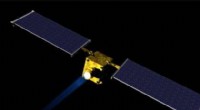
4. Power and Solar Arrays: Ion thrusters require substantial electrical power to generate ions and accelerate them. Solar arrays used for power generation on spacecraft have size and mass limitations. The efficiency of solar arrays decreases as they travel farther away from the sun. This poses challenges for generating enough power for continuous ion propulsion during extended Mars missions.
5. Combination with Other Propulsion Methods: Some proposed mission architectures for Mars colonization involve a combination of ion thrusters and other propulsion systems, such as chemical rockets. This hybrid approach aims to leverage the advantages of both propulsion technologies while mitigating their limitations.
6. Alternative Propulsion Technologies: Ongoing research and development focus on alternative propulsion technologies that could be more suitable for Mars missions. These include nuclear thermal propulsion, advanced solar sails, and laser propulsion. However, these technologies are still in various stages of development and require further advancements before they can be considered viable for human missions to Mars.
In conclusion, while the NASA X3 ion thruster represents significant progress in space propulsion, its application to propelling human expeditions to Mars is still under exploration and assessment. The challenges associated with long transit times, endurance and reliability, mass efficiency, and the need for substantial electrical power pose limitations. Combining ion propulsion with other technologies or pursuing alternative propulsion approaches remains a key area of research to enable future crewed missions to Mars.