One of the challenges in defining life is that we have only ever encountered life on Earth. This means that we have no other examples to compare it to, and it is possible that life could exist in forms that we cannot currently imagine. For example, some scientists speculate that life could exist on planets that orbit other stars, or even in the deep oceans of Jupiter or Saturn.
Another challenge is that the definition of life is constantly changing as we learn more about the natural world. For example, in the 19th century, it was believed that all living things were composed of cells. However, we now know that some viruses, such as the HIV virus, are not composed of cells, but are still considered to be living things.
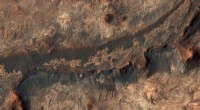
Despite these challenges, NASA is making progress in its investigation of the question of whether or not we will know life when we see it. One of the most important tools that NASA is using is the Mars Reconnaissance Orbiter, which is currently orbiting the planet Mars. The Mars Reconnaissance Orbiter is equipped with a variety of instruments that can detect signs of life, such as the presence of water, methane, and other organic molecules.
If the Mars Reconnaissance Orbiter is able to detect signs of life on Mars, it would be a major breakthrough in our understanding of the universe. It would also give us hope that life may exist on other planets in our solar system, or even in other galaxies.
Here are some of the specific criteria that NASA is using to define life:
* Reproduction: The ability to produce offspring that are similar to the parent organism.
* Growth and development: The ability to grow and develop over time.
* Response to stimuli: The ability to respond to changes in the environment.
* Metabolism: The ability to convert energy from the environment into usable forms.
* Homeostasis: The ability to maintain a stable internal environment despite changes in the external environment.
* Adaptation: The ability to change over time in response to changes in the environment.
* Evolution: The ability to undergo genetic changes over time that result in new traits.
These criteria are not meant to be exhaustive, and NASA is constantly refining and updating them as we learn more about the natural world. However, they provide a starting point for our investigation into the question of whether or not we will know life when we see it.