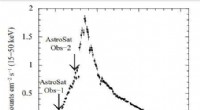
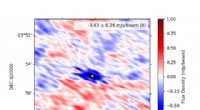
One crucial factor in making this prediction possible was the identification of potential "failed supernovae" - massive stars that undergo a core-collapse but fail to produce a luminous supernova explosion. These failed supernovae were theorized to produce long-duration GRBs. By combining observations from radio telescopes and X-ray observatories, astronomers were able to identify several candidates for such failed supernovae.
Armed with this information, researchers were able to predict the approximate time and location of potential GRBs associated with these failed supernovae. The predictions were made public, allowing observatories worldwide to point their telescopes toward the predicted regions. True to the predictions, GRBs were detected within the anticipated timeframe and location, confirming the theoretical models and providing vital insights into the nature of these cosmic events.
The successful prediction of galactic GRBs highlights the growing capabilities of astronomers to study and comprehend some of the most extreme phenomena in the universe. Such observations not only expand our knowledge of the life cycles of massive stars but also provide unique opportunities to explore the conditions and processes that create these powerful bursts of energy. As we continue to refine our understanding and observational techniques, we can expect more groundbreaking discoveries and insights into the mysteries of the cosmos.