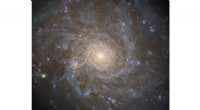
However, this process is not sustainable. As stars form, they release energy in the form of ultraviolet light and stellar winds. This energy can heat and disperse the gas and dust clouds that are the fuel for future star formation. Eventually, the galaxy will run out of gas and dust, and star formation will cease.
A new study led by researchers from the University of California, Riverside has found that the collision of two galaxies can provide a new source of gas and dust for star formation. The collision can compress the gas and dust in the two galaxies, triggering a burst of star formation. This burst of star formation can be so intense that it can rejuvenate a galaxy that was previously on the verge of dying.
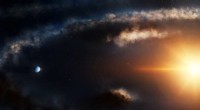
The study's findings are based on observations of the collision between two galaxies called NGC 4038 and NGC 4039. This collision is currently ongoing, and the two galaxies are expected to merge completely within the next few hundred million years. The observations show that the collision has triggered a burst of star formation in both galaxies. This burst of star formation is so intense that it is producing more stars than either galaxy would have produced on its own.
The study's findings have important implications for our understanding of galaxy evolution. They show that collisions between galaxies can play a key role in keeping galaxies alive and active. This is especially important for understanding the evolution of galaxies in the early universe, when collisions between galaxies were more common.