In reality, most planetary systems, including our own solar system, exhibit relatively stable and predictable orbits. The laws of physics, primarily governed by gravity, dictate the paths of celestial bodies over long periods. While irregularities and disturbances can occur, the extreme chaos depicted in the series would be statistically improbable.
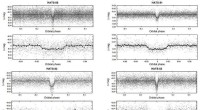
Astronomers have studied numerous exoplanetary systems (planets outside our solar system) and observed a variety of orbital configurations. Some exoplanets exhibit eccentric orbits or may be part of multi-star systems, leading to complex dynamics. However, the exact arrangement portrayed in "The Three-Body Problem" remains highly speculative and would require extraordinary, unlikely circumstances to manifest in nature.
It's essential to differentiate between scientific possibility and creative license in fictional works. While some science fiction concepts have roots in real scientific ideas, they often amplify or manipulate these concepts for storytelling purposes. "The Three-Body Problem" showcases the possibilities of intricate celestial mechanics but should not be interpreted as a fully accurate representation of our understanding of planetary orbits.