Triton, the largest moon of Neptune, is one of the most intriguing objects in our solar system. Discovered in 1846 by William Lassell, Triton is a small, icy world with a thin atmosphere and a complex surface geology. In 1989, the Voyager 2 spacecraft flew by Triton and provided us with our first close-up look at this fascinating moon.
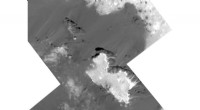
One of the most interesting things about Triton is its surface. Triton's surface is covered in a variety of features, including volcanoes, geysers, and ice plains. The volcanoes on Triton are not powered by heat from the interior of the moon, but rather by the heat generated by the tidal forces exerted by Neptune. This makes Triton the only known volcanic object in the solar system that is not powered by internal heat.
The geysers on Triton are also unique. The geysers on Triton erupt from the surface of the moon and spew out plumes of gas and ice particles. These geysers are thought to be powered by the heat from the interior of Triton, which is heated by the tidal forces exerted by Neptune.
The ice plains on Triton are also very interesting. The ice plains on Triton are thought to be formed by the deposition of ice particles from the geysers. The ice plains are very smooth, and they are thought to be relatively young.
Triton is a very complex and intriguing object, and it is still not clear whether or not it could support life. However, the discovery of water on Triton and the presence of volcanoes and geysers suggest that Triton could be a potential habitat for life. If life does exist on Triton, it would be very different from life on Earth. Triton is a very cold and dark place, and the surface of the moon is constantly bombarded by radiation from Neptune. However, there are some extremophile organisms on Earth that are able to survive in very harsh environments, and it is possible that similar organisms could exist on Triton.
The search for life beyond Earth is a long and difficult one, but it is also a very exciting one. The discovery of life on Triton would be a major breakthrough in our understanding of the universe, and it would give us a new perspective on our place in the cosmos.