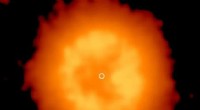
According to the traditional theory of planet formation, it takes several million years for a protoplanetary disk to cool down and condense into planets. However, the planets around PDS 70 are thought to have formed much more quickly, possibly within the last million years.
This discovery suggests that there may be alternative pathways to planet formation that we don't yet fully understand. It's also possible that the planets around PDS 70 are just a rare exception to the rule, and that most planets do form according to the traditional theory.
Either way, the discovery of these planets is an exciting development that is helping us to better understand the formation of our solar system and beyond.
Here are some of the key questions that the discovery of these planets raises:
* How do planets form so quickly?
* Are there other alternative pathways to planet formation?
* Are these planets just a rare exception to the rule?
* What does this discovery tell us about the formation of our solar system?
These are just a few of the questions that scientists are working to answer. As we continue to study these planets and others like them, we will gain a better understanding of how planets form and evolve.