1. Matter Inflow: Gas and dust from the surrounding environment, such as a companion star or interstellar gas cloud, begins to flow towards the black hole. This matter is often referred to as the accretion disk.
2. Magnetic Field Generation: Inside the accretion disk, the differential rotation (where different parts of the disk rotate at different speeds) helps amplify magnetic fields through a process called dynamo action. These magnetic fields thread the plasma within the accretion disk.
3. Magnetic Arrest: As the accretion disk gas flows inwards, it encounters the strong magnetic fields. When the magnetic pressure becomes comparable to the thermal pressure of the gas, the gas becomes "magnetically arrested". This happens at a certain radius from the black hole, known as the magnetospheric radius.
4. Magnetic Channeling: Within the magnetosphere (the region dominated by magnetic forces), the gas is guided along the magnetic field lines towards the black hole. The infalling gas forms collimated streams or jets, which help transport mass and energy from the outer parts of the accretion disk to the inner regions.
5. Dissipation and Accretion: As the gas streams move closer to the black hole, they undergo various processes that dissipate their energy, including magnetic reconnection and collisional interactions. This dissipation leads to the release of heat, causing the gas to become hot and emit X-rays and other forms of high-energy radiation.
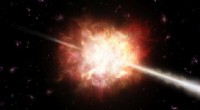
6. Jet Formation: A fraction of the accreting gas is expelled in powerful jets that emerge perpendicular to the accretion disk. These jets are driven by the interaction between the infalling gas and the strong magnetic fields near the black hole.
Throughout the MAD accretion process, the strong magnetic fields play a critical role in channeling matter onto the black hole, controlling the rate and pattern of accretion, and driving energetic phenomena like jets. The combination of magnetic fields and differential rotation makes MAD accretion an efficient mechanism for feeding supermassive black holes at the centers of galaxies and enabling them to grow in size and power.