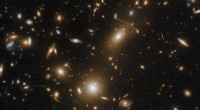
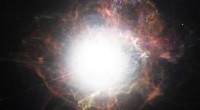
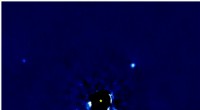
The images, taken by Webb's Near-Infrared Camera (NIRCam), reveal galaxies that are actively forming stars and producing enormous amounts of gas. This gas is heated by the intense radiation from young stars, causing it to glow brightly in the infrared spectrum. Webb's powerful infrared capabilities allow astronomers to observe these galaxies in unprecedented detail, providing insights into the processes that shaped the early universe.
One of the most striking galaxies captured by Webb is known as SPT0418-47. This galaxy, located about 12 billion light-years from Earth, is so bright in the infrared that it was easily detected by Webb's NIRCam. Observations of SPT0418-47 reveal that it is a highly turbulent environment, with vigorous star formation taking place throughout the galaxy.
Another galaxy observed by Webb is known as GNz11. This galaxy, located about 13.4 billion light-years from Earth, is thought to be one of the oldest and most distant galaxies ever observed. GNz11 is also very bright in the infrared, and Webb's observations have revealed that it is a rapidly growing galaxy, forming stars at an incredibly high rate.
The new images from Webb provide astronomers with valuable insights into the early universe. By studying these distant galaxies, researchers can learn more about the processes that led to the formation of stars and galaxies, and how the universe evolved over time. Webb's powerful capabilities are expected to revolutionize our understanding of the cosmos and allow astronomers to probe even deeper into the mysteries of the early universe.