1. Subsurface Oceans:
One of the most exciting discoveries about Mars is the potential presence of liquid water beneath its surface. Evidence from spacecraft data suggests that Mars once had a warmer and wetter past, and there might still be reservoirs of liquid water beneath its polar ice caps or within the depths of its Valles Marineris, the largest canyon in our solar system. These subsurface oceans could potentially harbor microbial life, making Mars a compelling target for astrobiology studies.
2. Cryovolcanism:
Cryovolcanism is a unique phenomenon observed on Mars, driven by the eruption of volatile substances like water, carbon dioxide, or ammonia from beneath the surface. These cryovolcanic eruptions often create features such as domes, mounds, and chaotic terrain. The presence of cryovolcanism indicates ongoing geological activity and potential heat sources within the Martian interior.
3. Mantle Composition and Dynamics:
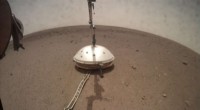
Scientists are continuously studying the composition and dynamics of Mars's mantle, the layer between the crust and the core. Understanding the composition of the Martian mantle can provide insights into how Mars formed and evolved over geological timescales. Marsquakes, detected by the InSight mission, provide valuable data for probing the structure and dynamics of the Martian interior, revealing the presence of a relatively thin crust and a partly molten core.
4. Core Properties:
While Mars has a solid inner core, there is strong evidence for a liquid outer core. This liquid outer core generates a global magnetic field, although it is much weaker compared to Earth's magnetic field. The study of Mars's core characteristics and the evolution of its magnetic field adds to our understanding of planetary magnetism and the planet's internal dynamics.
5. Ice Sheets and Polar Caps:
The polar regions of Mars are covered by vast ice sheets composed primarily of water ice, but they also contain significant amounts of carbon dioxide ice and dust. These ice deposits provide valuable clues about Mars's past climate, its volatile inventory, and the potential exchange of materials between the Martian atmosphere and the polar caps.
6. Unique Geologic Features:
Mars is home to an array of intriguing geological features, including massive volcanoes, deep chasms, and sedimentary layers that hint at past environmental conditions. The Martian landscape offers a glimpse into the complex geological history of the planet, shedding light on its evolution over billions of years.
7. Past Climate and Habitability:
The study of the Martian interior, combined with surface observations and data from rovers and orbiters, helps scientists unravel the planet's past climate and habitability conditions. Evidence suggests that Mars's climate was once warmer and wetter, with flowing water and perhaps even oceans. Understanding these past conditions is critical in the search for potential life on Mars, both in the past and present.
In conclusion, Mars, with its fascinating geological and environmental features, continues to captivate scientists and researchers worldwide. By studying what lies beneath its surface, including potential liquid water, cryovolcanism, mantle dynamics, core properties, polar caps, and unique geological features, we are gaining valuable insights into Mars's formation, evolution, and the potential for past or present habitability.