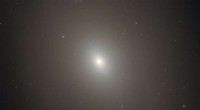
1. Morphological Differences: Early galaxies exhibited a wider variety of morphological structures compared to present-day galaxies. They were predominantly irregular or elliptical in shape, with fewer well-defined spiral or barred spiral structures.
2. Size and Mass: Early galaxies were generally smaller and less massive than modern galaxies. They had lower stellar masses and were more compact, with a higher concentration of stars.
3. Star Formation Rates: Star formation in the early universe was extremely intense and rapid. Galaxies experienced massive bursts of star formation, creating copious amounts of new stars at a much higher rate than observed in most galaxies today.
4. Gas Content: Early galaxies contained significantly more gas relative to their stellar mass. This gas played a crucial role in fueling the vigorous star formation and was eventually consumed or ejected from the galaxies.
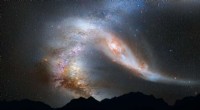
5. Mergers and Interactions: Galaxy mergers and interactions were far more prevalent in the early universe due to the higher density of galaxies. Collisions and mergers between galaxies shaped their morphology, triggering episodes of intense star formation.
6. Chemical Abundance: Early galaxies had lower metallicities compared to present-day galaxies. Metals such as oxygen, nitrogen, and iron were less abundant in the interstellar medium, which affected the star formation processes and the overall chemical composition of galaxies.
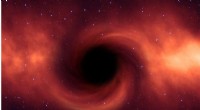
7. Active Galactic Nuclei (AGN): AGN, powered by the accretion of matter onto supermassive black holes, were more common and energetic in early galaxies. Quasars, incredibly luminous AGN, were abundant in the early universe, contributing significantly to the ionization and heating of the intergalactic medium.
8. Large-Scale Structure: The large-scale distribution of galaxies in the early universe was less organized compared to today. Galaxy clusters and superclusters were less well-defined, and the cosmic web of galaxy filaments and voids was still in the process of forming.
9. Intergalactic Medium: The intergalactic medium (IGM) in the early universe was denser, hotter, and more opaque to ultraviolet light due to the presence of neutral hydrogen gas. The IGM underwent a gradual process of reionization as ionizing radiation from early stars and quasars cleared out the neutral gas.
10. Evolutionary State: Early galaxies were undergoing rapid evolution and transformation. As the universe expanded and time progressed, galaxies grew, matured, and acquired the characteristics of present-day galaxies through various processes such as stellar evolution, feedback from star formation, and interactions with neighboring galaxies.
By studying these differences, astronomers gain insights into the formation and evolution of galaxies over cosmic time and the physical processes that shaped the universe we observe today.