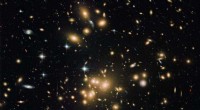
1. First Light and the Cosmic Dawn: JWST will observe the earliest galaxies and stars that emerged after the Big Bang. By detecting their faint light, JWST can probe the cosmic "dawn" when the first sources of light started to illuminate the universe. These observations can provide valuable insights into the conditions and mechanisms that led to the reionization of hydrogen.
2. Redshifted Emission Lines: As the first galaxies formed and began to emit ultraviolet radiation, they gradually ionized the surrounding neutral hydrogen gas. This process is known as reionization. JWST's infrared capabilities allow it to detect redshifted emission lines, particularly the hydrogen Lyman-alpha (Ly-alpha) line, which can reveal the presence of ionized hydrogen gas. By studying the spatial distribution and intensity of the Ly-alpha emission, scientists can map out the progress of reionization over cosmic time.
3. Galaxy Evolution and Feedback: JWST can study the properties of galaxies during the epoch of reionization. It can provide information about the stellar populations, star formation rates, and the evolution of galaxy morphology. By tracing the growth and evolution of galaxies, scientists can gain insights into the processes that drove reionization, such as the role of supernovae and active galactic nuclei (AGN) feedback.
4. Probing the Intergalactic Medium: JWST's high sensitivity and spatial resolution will allow it to probe the intergalactic medium (IGM) and the diffuse gas between galaxies. By detecting the absorption of ultraviolet radiation by neutral hydrogen in the IGM, known as the Lyman-alpha forest, JWST can measure the neutral fraction of hydrogen at different redshifts. This information helps constrain models of reionization and the evolution of the IGM.
5. High-Redshift Quasars: Quasars are extremely luminous, distant galaxies powered by supermassive black holes. JWST can detect quasars at higher redshifts than previously observed. By studying the properties of these quasars and the surrounding intergalactic medium, scientists can infer the state of reionization during the early stages of the universe.
Through these observations and studies, the James Webb Telescope is expected to provide crucial data and insights that will broaden our understanding of cosmic reionization and the transition from a dark and neutral universe to the luminous and ionized universe we observe today.