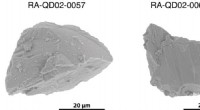
1. Composition: Asteroids are primarily rocky or metallic in composition, while comets are composed of a mixture of ice, dust, and rock.
2. Size: Asteroids typically range in size from a few meters to hundreds of kilometers across, while comets can have a nucleus that is only a few kilometers in diameter but can develop a tail that is millions of kilometers long.
3. Orbits: Asteroids generally have orbits that are confined to the asteroid belt, which lies between the orbits of Mars and Jupiter. Comets, on the other hand, can have orbits that take them far beyond the planets, and some even come from outside the Solar System.
4. Activity: Asteroids are generally inactive, meaning they do not display any significant changes over time. Comets, however, become active when they approach the Sun, and their icy surfaces begin to vaporize, creating a coma (a cloud of gas and dust) and, in some cases, a tail.
5. Tail: Asteroids do not have tails, while comets can develop a tail when they approach the Sun. The tail is made up of dust and gas particles that are expelled from the comet's nucleus as it is heated by the Sun's radiation.
Overall, asteroids are rocky or metallic bodies that are found primarily in the asteroid belt, while comets are icy bodies that have orbits that can take them far beyond the planets and display activity when they approach the Sun.