Introduction:
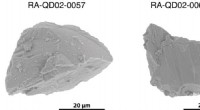
As space agencies and nations plan increased lunar missions, understanding and mitigating the effects of moondust becomes increasingly important. Moondust, composed of fine, abrasive particles created by meteorite impacts and solar radiation over billions of years, poses various risks to spacecraft, equipment, and human health. This study aims to address how lunar missions contribute to moondust distribution and the implications for future missions and long-term lunar operations.
Moondust Distribution:
Lunar missions such as landings, takeoffs, and rover movements disturb the settled moondust layer, causing it to be lifted into the atmosphere. The study analyzes and models the factors influencing moondust transport, including exhaust plumes, the electrostatic environment, the angle of descent or ascent, and the impact of regolith particles. By tracking moondust trajectories, the study identifies areas where moondust is most likely to accumulate and disperse.
Implications for Lunar Missions:
The study investigates the impact of moondust on spacecraft, equipment, and human health. It evaluates how moondust can damage surfaces, clog filters and mechanisms, and degrade solar panels. The effects on astronaut suits and the potential health hazards of inhaling moondust particles are also considered. Based on these findings, the research provides recommendations for optimizing mission design, minimizing dust generation, and ensuring the safety of astronauts and equipment.
Mitigation Strategies:
To mitigate the effects of moondust, the study explores various strategies. It reviews dust suppression technologies, such as electrostatic shields and dust collectors, which can be employed during landing and takeoff to minimize dust dispersion. Additionally, it examines techniques for designing lunar habitats and equipment that are resistant to moondust accumulation and can withstand the abrasive nature of dust particles.
Long-Term Lunar Operations:
As future missions envision extended lunar stays and potential lunar settlements, addressing the challenges posed by moondust becomes critical. The study outlines potential strategies for managing and utilizing moondust over the long term. It examines the possibility of using moondust as a resource, for example, in construction or manufacturing. Additionally, it explores the implications of dust transport for planetary protection, considering how dust can potentially contaminate pristine lunar environments or spread to other celestial bodies.
Conclusion:
This study analyzes the impact of lunar missions on moondust distribution and explores the implications for future missions and long-term lunar operations. By understanding the behavior and risks associated with moondust, space agencies can develop effective mitigation strategies and ensure the success and safety of lunar exploration endeavors. As humanity ventures further into space, addressing the challenges of moondust will be essential for sustainable lunar exploration and the advancement of space exploration overall.