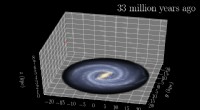
The dwarf galaxy in question is called the Sagittarius Dwarf Spheroidal Galaxy, or Sag dSph for short. It is a small, faint galaxy that orbits the Milky Way at a distance of about 50,000 light-years. Sag dSph is thought to be the remnant of a larger galaxy that was once disrupted by the gravitational forces of the Milky Way.
Chemical evidence has revealed that Sag dSph has played a role in the formation of the Milky Way's thick disk. The thick disk is a region of the Milky Way that lies between the thin disk, where most of the stars reside, and the halo, which is the outermost region of the galaxy. The thick disk is thought to have formed through the accretion of smaller galaxies, and Sag dSph is one of the galaxies that is believed to have contributed to its formation.
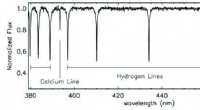
The chemical evidence for this contribution comes from the study of stars in the thick disk and the comparison of their chemical composition with that of stars in Sag dSph. Stars are formed from gas and dust, and the chemical composition of a star reflects the chemical composition of the gas and dust from which it formed. By studying the chemical composition of stars in the thick disk and comparing it with that of stars in Sag dSph, astronomers have found that the two are very similar. This suggests that the gas and dust from which the stars in the thick disk formed came from Sag dSph.
In addition to the thick disk, Sag dSph is also thought to have contributed to the formation of the Milky Way's stellar halo. The stellar halo is the outermost region of the Milky Way, and it is made up of old stars that are thought to have formed early in the history of the galaxy. The chemical composition of stars in the stellar halo is also similar to that of stars in Sag dSph, suggesting that Sag dSph contributed to the formation of this region of the galaxy as well.
The study of the chemical evidence from stars in the Milky Way and Sag dSph has provided valuable insights into the formation and evolution of our galaxy. It has shown that the accretion of smaller galaxies, such as Sag dSph, has played a significant role in the growth of the Milky Way.