1. Stellar evolution: As stars in a galaxy age, they eventually run out of fuel and die. This process releases heavy elements into the interstellar medium, which can lead to the formation of new stars. However, over time, the supply of gas and dust available for star formation will eventually be exhausted.
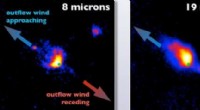
2. Supermassive black holes: Most galaxies contain a supermassive black hole at their centre. These black holes can grow in mass by accreting gas and dust from the surrounding galaxy. As they grow, they can become active galactic nuclei (AGN), which emit powerful jets of energy that can heat the interstellar medium and prevent star formation.
3. Galactic collisions and mergers: Galaxies can also die through collisions and mergers with other galaxies. When two galaxies collide, their gravitational forces can disrupt each other's structures and trigger bursts of star formation. In some cases, the collision can lead to the formation of a new galaxy. However, in other cases, the galaxies can be completely destroyed.
4. Environmental effects: The environment of a galaxy can also play a role in its death. For example, galaxies in dense environments are more likely to experience collisions and mergers, while galaxies in isolated environments are more likely to die from stellar evolution and AGN feedback.
The death of a galaxy is a natural process that is part of the evolution of the universe. However, the study of galaxy death is important because it can help us to understand the formation and evolution of galaxies and the universe as a whole.