Astronomers have discovered a rare type of star that could challenge existing theories about how stars explode and create new elements. The star, known as a “red nova,” is only the second of its kind ever observed.
Red novae are thought to be caused by the merger of two white dwarf stars. White dwarfs are the remnants of stars that have burned through their nuclear fuel and collapsed under their own gravity. When two white dwarfs merge, the resulting explosion can create a red nova.
Red novae are much brighter than traditional novae, which are caused by the eruption of a single white dwarf. They are also much rarer, with only two red novae ever observed.
The discovery of the second red nova could help astronomers to better understand how these rare explosions occur and how they contribute to the creation of new elements.
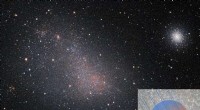
The first red nova was observed in 2008. It was located in the galaxy M31, which is about 2.5 million light-years from Earth. The second red nova was observed in 2022. It was located in the galaxy NGC 300, which is about 6 million light-years from Earth.
The two red novae that have been observed so far have some similarities, but they also have some differences. The first red nova was much brighter than the second red nova. The first red nova also lasted for several months, while the second red nova only lasted for a few days.
Astronomers are still studying the data from the two red novae to try to understand their differences. They hope that future observations of red novae will help them to better understand these rare explosions and their role in the creation of new elements.
The Science of Stellar Explosions
Stellar explosions are a major force in the universe. They are responsible for the creation of new elements, the dispersal of dust and gas, and the formation of new stars.
There are two main types of stellar explosions: supernovae and novae. Supernovae are the most powerful explosions in the universe. They occur when a massive star collapses under its own gravity and then rebounds, expelling its outer layers into space. Novae are less powerful explosions that occur when a white dwarf star accretes matter from a companion star.
Both supernovae and novae can create new elements. Supernovae create heavy elements, such as iron, gold, and uranium. Novae create lighter elements, such as hydrogen, helium, and carbon.
Stellar explosions are also important for dispersing dust and gas throughout the universe. This dust and gas can eventually form new stars and planets.
The study of stellar explosions is a complex and challenging field. Astronomers are constantly learning new things about these powerful events and their role in the universe.