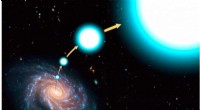
Ejection from Planetary Systems: Some rogue planets may have been ejected from their original planetary systems due to gravitational interactions with other planets or disturbances caused by massive objects like passing stars. Gravitational interactions within a crowded planetary system can lead to orbital instability, causing planets to be ejected into interstellar space.
Failed Star Formation: Rogue planets could also form independently from the collapse of small gas clouds that lack sufficient mass to form stars. These failed stars, known as brown dwarfs, can be mistaken for rogue planets. Some rogue planets may have formed in this manner, but their true nature can be challenging to determine.
Fragmentation of Disks: During the formation of planetary systems, the disk of gas and dust around the central star can sometimes fragment into clumps. These clumps may collapse and form planets that never properly accrete onto the central star, eventually becoming rogue planets.
Capture by Stars: Rogue planets may also be captured by stars during their journey through the galaxy. As a rogue planet passes near a star, its trajectory can be altered by the star's gravitational pull, causing it to become bound to the star's gravitational influence and eventually becoming a companion.
Primordial Formation: Another hypothesis suggests that some rogue planets may have formed in the early stages of galaxy formation when interstellar clouds were more chaotic and dense. Gravitational interactions within these early clouds could have given rise to isolated planets that never became part of a particular star system.
Observational challenges contribute to the difficulty of studying rogue planets, as they are extremely difficult to detect due to their lack of a host star and faint light emission. As technology improves and more advanced telescopes come online, astronomers may gain a better understanding of the formation and prevalence of rogue planets.