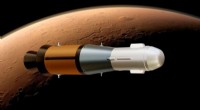
NASA’s Transiting Exoplanet Survey Satellite (TESS) is on a mission to find Earth-sized planets orbiting nearby bright stars.
TESS will survey 85 percent of the sky over its two-year mission, searching for these small, rocky worlds that are potentially habitable.
TESS is the next step in NASA’s search for life beyond Earth. The Kepler spacecraft, launched in 2009, discovered thousands of exoplanets, including many that are Earth-sized. However, Kepler was only able to search a small patch of the sky.
TESS will be able to search a much wider area of the sky and is expected to find thousands of new exoplanets, including hundreds of Earth-sized worlds.
The first TESS observations began in July 2018. The spacecraft is scheduled to continue its survey until 2021.
Scientists are eager to see what TESS finds. If the mission is able to find just one Earth-sized planet orbiting a nearby star, it would be a major breakthrough in our search for life beyond Earth.
Here are some of the key features of TESS:
* It is the first spacecraft designed specifically to search for transiting exoplanets. Transiting exoplanets are planets that pass in front of their stars, causing a slight dimming of the star’s light.
* TESS is equipped with four cameras, each of which has a wide field of view. This allows TESS to survey large areas of the sky quickly.
* TESS is able to detect planets that are as small as Earth. This is a significant improvement over previous planet-hunting missions, which were only able to detect planets that were several times larger than Earth.
* TESS is able to search for planets orbiting stars of all types. This means that TESS has a chance to find planets in a variety of environments.
TESS is a major step forward in our search for life beyond Earth. The mission is expected to provide us with a wealth of new information about the planets that orbit nearby stars.