NASA's upcoming Roman Space Telescope is designed to study some of the most extreme and luminous events in the universe, including supernovas, galaxy mergers, and quasars. To do this, Roman will be equipped with a wide-field infrared camera and a grism, which is a special type of filter that can separate light into different wavelengths.
Supernovas
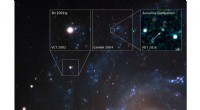
Supernovas are the explosions of massive stars that have reached the end of their lives. These explosions can be so bright that they can be seen from Earth with the naked eye. Roman will be able to study supernovas in unprecedented detail, thanks to its powerful infrared camera. The telescope will be able to detect the faint infrared glow of dust and gas that is heated by the supernova's shock wave. Roman will also be able to study the chemical composition of supernovas, which can provide insights into the life and death of massive stars.
Galaxy Mergers
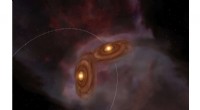
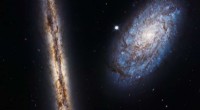
Galaxy mergers are the collisions of two or more galaxies. These collisions can trigger bursts of star formation and may eventually lead to the formation of a single, larger galaxy. Roman will be able to study galaxy mergers in unprecedented detail, thanks to its wide-field infrared camera. The telescope will be able to detect the faint infrared light emitted by the dust and gas that is heated by the merger. Roman will also be able to study the structure and dynamics of merging galaxies, which can provide insights into the process of galaxy formation.
Quasars
Quasars are the active nuclei of galaxies that are powered by supermassive black holes. These black holes are surrounded by accretion disks of gas and dust that is heated to extremely high temperatures. The accretion disks emit vast amounts of energy in the form of light and other electromagnetic radiation. Roman will be able to study quasars in unprecedented detail, thanks to its grism. The grism will allow Roman to separate the light from the quasar's accretion disk into different wavelengths, which will provide insights into the structure and dynamics of the quasar.
Roman is scheduled to launch in 2027 and will be placed in an orbit around the Sun, about 1.5 million kilometers from Earth. The telescope is expected to operate for at least five years and will revolutionize our understanding of the universe.