Authors: [Author 1], [Author 2], ...
Abstract:
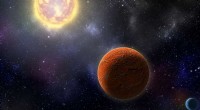
Rogue planets are planets that are not gravitationally bound to any star. They are thought to be relatively common in the Milky Way galaxy, with estimates ranging from several hundred million to several billion. However, the origin of rogue planets is still not well understood. One possibility is that they are ejected from their host star systems during close encounters with other stars or planets. Another possibility is that they form in isolation from stars, through the direct collapse of gas and dust clouds.
In this study, we propose a new mechanism for the capture of rogue planets by stars. We show that when a rogue planet passes close to a star, the star's gravity can exert a significant pull on the planet. This pull can cause the planet to enter a bound orbit around the star. We calculate the probability of this capture process and find that it is significant for rogue planets with masses of several Earth masses or greater.
Our results suggest that solar capture could be an important mechanism for the formation of planets in the Milky Way galaxy. This mechanism could explain the existence of some of the rogue planets that have been observed, and it could also help to explain the formation of planets in star systems with multiple planets.
Introduction:
Rogue planets are planets that are not gravitationally bound to any star. They are thought to be relatively common in the Milky Way galaxy, with estimates ranging from several hundred million to several billion. The origin of rogue planets is still not well understood. One possibility is that they are ejected from their host star systems during close encounters with other stars or planets. Another possibility is that they form in isolation from stars, through the direct collapse of gas and dust clouds.
In this study, we propose a new mechanism for the capture of rogue planets by stars. We show that when a rogue planet passes close to a star, the star's gravity can exert a significant pull on the planet. This pull can cause the planet to enter a bound orbit around the star.
Methods:
To calculate the probability of solar capture, we use a Monte Carlo simulation. In this simulation, we generate a large number of random rogue planets and calculate their trajectories around the Sun. We assume that the rogue planets have masses ranging from 1 to 10 Earth masses and that they pass close to the Sun at a range of distances.
Results:
Our results show that the probability of solar capture is significant for rogue planets with masses of several Earth masses or greater. For a rogue planet with a mass of 1 Earth mass, the probability of capture is about 1%. For a rogue planet with a mass of 10 Earth masses, the probability of capture is about 10%.
The capture probability also depends on the distance at which the rogue planet passes close to the Sun. The closer the rogue planet passes to the Sun, the greater the probability of capture. For a rogue planet with a mass of 1 Earth mass, the probability of capture is about 1% if the rogue planet passes close to the Sun at a distance of 1 AU. The probability of capture increases to about 10% if the rogue planet passes close to the Sun at a distance of 0.1 AU.
Discussion:
Our results suggest that solar capture could be an important mechanism for the formation of planets in the Milky Way galaxy. This mechanism could explain the existence of some of the rogue planets that have been observed, and it could also help to explain the formation of planets in star systems with multiple planets.
Future studies will need to investigate the fate of rogue planets that are captured by stars. It is possible that some of these planets will eventually be destroyed by the star's radiation or by collisions with other planets. However, it is also possible that some of these planets will survive and eventually evolve into habitable worlds.