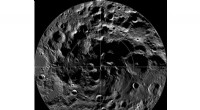
1. Crater Morphology: Interstellar impact craters may exhibit unique morphological characteristics that set them apart from craters created by lunar or asteroidal impacts. For instance, interstellar impactors are typically smaller and faster than their lunar or asteroidal counterparts, leading to craters with specific shapes and structures. Scientists analyze crater morphology, such as depth-to-diameter ratios and ejecta patterns, to identify potential interstellar impact craters.
2. Projectile Composition: The composition of the projectile that formed the crater can provide insights into its origin. Interstellar objects are expected to have distinct chemical signatures different from lunar or asteroidal materials. By studying the mineralogical and chemical composition of ejecta materials around craters, scientists can infer the projectile's nature and possibly link it to an interstellar source.
3. Crater Age: Interstellar impacts are relatively rare compared to lunar or asteroidal impacts. By estimating the age of a crater, scientists can determine if it formed during a period when the Moon was more likely to encounter interstellar objects. This involves analyzing the crater's surface features, erosion rates, and the presence of secondary craters formed by ejecta from the primary impact.
4. Orbital Calculations: In some cases, scientists can calculate the trajectory of the projectile that formed a crater to determine its origin. By analyzing the crater's location, orientation, and other orbital parameters, they can assess whether the impactor came from an interstellar trajectory or from within the solar system.
5. Numerical Simulations: Scientists use computer simulations to model the impact process and predict the characteristics of craters formed by interstellar objects. By comparing the results of these simulations with observed crater features, they can identify craters that are consistent with interstellar impacts.
It's important to note that distinguishing between interstellar impact craters and those formed by other objects is a complex process that involves multiple lines of evidence and analyses. Scientists often use a combination of these methods to determine the origin of craters on the Moon and other celestial bodies.