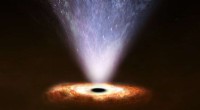
Discovery of Ultra-Fast Outflows:
Using observations from telescopes like the Atacama Large Millimeter/submillimeter Array (ALMA) and the Very Large Array (VLA), astronomers have detected ultra-fast outflows in various regions within the Milky Way. These outflows are found in star-forming galaxies and active galaxies containing supermassive black holes.
Star Formation Feedback Processes:
One of the vital roles of ultra-fast outflows is in regulating star formation within the Milky Way. As massive stars form in the galaxy's central regions, they produce enormous energy through intense radiation and powerful stellar winds. These processes can generate extreme pressure that propels gas and dust away from the star-forming regions, resulting in ultra-fast outflows.
By understanding the kinematics and properties of ultra-fast outflows, scientists can infer the star formation rate and the impact of stellar feedback on the surrounding interstellar medium. This knowledge helps in mapping the history of star formation within the Milky Way and understanding the interplay between massive stars, gas dynamics, and galaxy evolution.
Impact of Supermassive Black Holes:
Supermassive black holes residing at the centers of galaxies, including the Milky Way's Sagittarius A* (Sgr A*), are known to be powerful engines driving energetic phenomena. In the case of ultra-fast outflows, the gravitational forces exerted by the supermassive black hole can influence the dynamics and morphology of these outflows.
Observations of ultra-fast outflows associated with Sgr A* suggest that the black hole's past activity, such as periods of intense accretion and outflow, might have played a crucial role in shaping the Milky Way's central regions. The presence of ultra-fast outflows emanating from Sgr A* provides insights into the formation and evolution of the Milky Way's central black hole and its impact on the galaxy's overall dynamics and evolution.
Chemical Enrichment:
Ultra-fast outflows also contribute to the chemical enrichment of the interstellar medium. As the outflows carry gas and dust away from the star-forming regions, they distribute metals and other chemical elements throughout the galaxy. By analyzing the composition and properties of ultra-fast outflows, scientists can study the chemical evolution of the Milky Way and gain insights into the processes that contribute to the abundance and diversity of chemical elements.
In summary, the study of ultra-fast outflows in the Milky Way provides valuable information about star formation processes, the role of supermassive black holes, and the chemical enrichment of the galaxy. By understanding the dynamics and properties of these extreme outflows, scientists gain a better understanding of the Milky Way's past and ongoing evolution and its place within the broader context of galaxy formation and evolution.