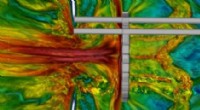
In the direct collapse scenario, a large cloud of gas with a mass of about 100 million times the mass of the sun collapses under its own gravity. As the cloud collapses, it heats up and emits a lot of radiation. This radiation pushes against the infalling gas, slowing down the collapse. Eventually, the cloud reaches a point where the inward gravitational pull is balanced by the outward radiation pressure. At this point, the cloud stops collapsing and forms a stable supermassive black hole.
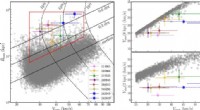
The direct collapse scenario is supported by several observations. One observation is that there are a number of supermassive black holes that are found in very young galaxies. These galaxies are only a few hundred million years old, which is not enough time for a supermassive black hole to form through the traditional process of stellar evolution. Another observation is that there is a correlation between the mass of a galaxy's supermassive black hole and the total mass of the galaxy. This suggests that the two objects formed together.
The direct collapse scenario is still being studied, and there are still a number of questions that need to be answered. However, it is a promising theory for how supermassive black holes form.