NASA's upcoming Roman Space Telescope is set to revolutionize our understanding of the universe. With its powerful infrared capabilities, Roman will be able to peer back in time to the earliest moments of the universe and search for primordial black holes.
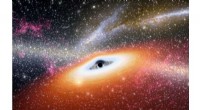
Primordial black holes are thought to have formed in the very early universe, just after the Big Bang. These tiny black holes are believed to be very small, with masses ranging from a billionth of a gram to a trillion times the mass of the Earth.
Primordial black holes are extremely difficult to detect, as they do not emit any light or radiation. However, they can be detected indirectly by their gravitational effects on the surrounding matter.
One way that Roman will search for primordial black holes is by looking for their effects on the cosmic microwave background (CMB). The CMB is the leftover radiation from the Big Bang, and it is thought that primordial black holes could cause distortions in the CMB.
Another way that Roman will search for primordial black holes is by looking for their effects on gravitational lensing. Gravitational lensing is the bending of light by the gravity of massive objects. If a primordial black hole passes in front of a distant star, it will bend the light from the star and cause it to appear distorted.
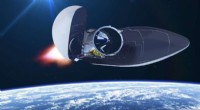
Roman is expected to launch in the mid-2020s. It will be placed in an orbit around the Sun, about 1.5 million miles from Earth. Roman will operate for at least five years, and it is expected to make major discoveries about the universe.
The search for primordial black holes is one of the most exciting and challenging problems in astrophysics. Roman Space Telescope is poised to make a major contribution to this search.