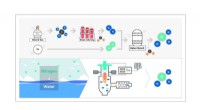
1. Water Abundance: The likelihood of an exoplanet having liquid water oceans is closely related to its distance from its host star (insolation), atmospheric composition, and surface temperature. These conditions must be suitable for maintaining a stable liquid water state.
2. Salinity Impact: Just as on Earth, ocean salinity affects the density, circulation patterns, and stratification of water bodies on exoplanets. For instance, variations in water density caused by salinity differences can influence the formation of ocean currents and the overall ocean-atmospheric heat transport, impacting climate patterns.
3. Chemical Composition: The composition of dissolved substances, including minerals, organic compounds, and atmospheric gases trapped in water, further shapes the water's physical and chemical properties. Some exoplanets might have oceans rich in dissolved minerals, potentially affecting their climate through altered reflectivity (albedo), chemical interactions, and heat storage capacity.
4. Biogeochemical Cycles: Earth's oceans participate in critical biogeochemical cycles that influence climate by exchanging carbon, oxygen, and other elements between the ocean, atmosphere, and land. The presence and nature of biological activity in exoplanet oceans could shape the exchange of gases and, consequently, the planet's climate over geological timescales.
5. Habitability: Suitable ocean salinity is one factor that helps determine the habitability of exoplanets. The balance between water salinity and atmospheric composition can impact the conditions necessary for sustaining life, particularly for organisms adapted to specific ranges of salinity.
6. Climate Feedbacks: Ocean salinity can create feedbacks that affect climate. Changes in ocean salinity, for example, may influence the formation of sea ice, alter the efficiency of heat transport by ocean currents, and modify cloud properties. These changes, in turn, can impact the planet's energy balance and climate stability.
Although we currently have limited direct observations or measurements of exoplanet ocean characteristics, ongoing research aims to refine our understanding of exoplanet atmospheres, surface conditions, and potential ocean properties through advanced observational techniques and theoretical models.