1. Proximity to Host Star:
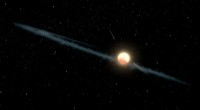
Wolf 1061c orbits its host star, Wolf 1061, within its star's habitable zone, which is the region where conditions might allow for liquid water on the planet's surface. Being in the habitable zone increases the chances that the planet could support life as we know it.
2. Planetary Characteristics:
Wolf 1061c is roughly Earth-sized, with a diameter of about 1.5 times that of our planet. This suggests that it could possess a rocky composition and have the potential for plate tectonics, a crucial feature for maintaining a habitable environment.
3. Atmosphere and Climate:
While we don't yet know the composition of Wolf 1061c's atmosphere or its climate, its location in the habitable zone suggests that conditions could be favorable for an atmosphere that could maintain liquid water on the surface. The planet's distance from its host star could allow for temperatures suitable for liquid water to exist.
4. Water Potential:
The presence of liquid water is essential for life as we understand it, and Wolf 1061c's position within the habitable zone makes it a prime candidate for hosting liquid water on its surface. If it possesses a sufficient atmosphere and temperature conditions, it could potentially support bodies of liquid water.
5. Habitability Indicators:
The study of Wolf 1061c and its characteristics, including its atmosphere, surface composition, and potential for water, will help astronomers refine their understanding of what makes a planet habitable. This can aid in the search for other potentially life-sustaining planets.
6. Future Exploration:
The discovery of Wolf 1061c and its potential habitability may inspire future space missions and endeavors aimed at studying this system in greater detail. Future telescopes and more advanced technology could provide additional information about its atmosphere, surface conditions, and potential for hosting life.
7. Astrobiology Implications:
The discovery of Wolf 1061c expands the pool of known potentially habitable planets, which allows scientists to study a wider range of planetary systems and conditions that could support life. This enhances our understanding of astrobiology and the distribution of habitable environments in our galaxy.
Overall, the discovery of Wolf 1061c offers an opportunity to explore a potentially Earth-like planet and gain a better understanding of the conditions necessary for habitability. Further studies and observations will be crucial in unraveling the mysteries surrounding this newly found world and its potential significance in the context of life beyond Earth.