1. Sagittarius A* (Sgr A*):
Located at the center of our Milky Way galaxy, Sgr A* is a supermassive black hole surrounded by a rotating accretion disk. By observing Sgr A* in greater detail, astronomers aim to better understand the dynamics of black hole accretion and the role of magnetic fields in shaping the disk's structure.
2. M87 Black Hole:
The black hole at the center of the giant elliptical galaxy M87 was the first black hole to be directly imaged by the EHT. Continued observation of this black hole can provide insights into the growth and evolution of supermassive black holes and their jets.
3. Centaurus A (Cen A):
Cen A hosts one of the closest supermassive black holes to Earth. Studying this black hole can help astronomers investigate the effects of black hole spin and the properties of the surrounding gas on accretion processes.
4. Messier 81 (M81) Black Hole:
The black hole at the center of M81 is a unique target due to its high inclination. This orientation offers a different perspective on the black hole's accretion disk, allowing astronomers to study relativistic jets and the interplay between the black hole's gravity and magnetic fields.
5. Quasars:
Quasars are extremely luminous objects powered by supermassive black holes. The EHT aims to resolve the central regions of quasars, probe their accretion disk structure, and understand the mechanisms responsible for their tremendous energy output.
6. Tidal Disruption Events (TDEs):
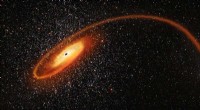
TDEs occur when a star passes too close to a supermassive black hole, leading to its tidal disruption. By observing these events, astronomers can gain insights into the physics of stellar disruption, the formation of accretion disks, and the properties of the black hole's gravitational potential.
7. Jets from Active Galactic Nuclei (AGN):
AGN are distant galaxies with active supermassive black holes at their centers, often producing powerful jets of particles. The EHT can provide detailed images of the launching and collimation regions of these jets, shedding light on their origin and the role of magnetic fields.
8. Intermediate-Mass Black Holes:
Intermediate-mass black holes fill the gap between stellar-mass and supermassive black holes. Detecting and studying these elusive black holes can help us understand their formation and evolution, and their role in shaping the structure of galaxies.
9. Ultra-Luminous X-ray Sources (ULXs):
ULXs are galaxies with extremely bright X-ray emission, possibly indicating the presence of supermassive black holes. By observing ULXs with the EHT, astronomers aim to determine the nature of the compact objects responsible for their luminosity.
10. Fast Radio Bursts (FRBs):
While not directly related to black holes, investigating the environment around FRBs with the EHT can provide insights into the astrophysical processes associated with these enigmatic signals.
11. Colliding Black Holes:
The EHT can potentially capture the dynamics of merging black hole systems, providing a unique window into the strong gravitational interactions and the growth of black holes over cosmic time.
12. Binary Black Hole Systems:
Observing binary black hole systems can help astronomers explore the interactions and dynamics of multiple black holes, the exchange of energy and angular momentum, and the formation of gravitational waves.
The EHT's capabilities are continuously evolving, and future technical advancements, such as more sensitive detectors and improved data processing techniques, will enable even more ambitious observations. These potential targets represent some of the most exciting frontiers of research in black hole astrophysics, and the EHT is poised to revolutionize our understanding of these fascinating objects.