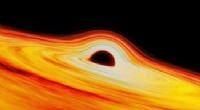
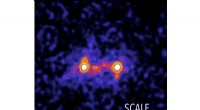
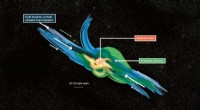
If the star's core is massive enough, the supernova will be so powerful that it will eject most of the star's material into space. The remaining material will be compressed into a neutron star or a black hole.
Iron is a key element in the process of a supernova. When a star's core reaches a certain temperature and density, it will begin to fuse iron. Iron is the most stable element, so it requires more energy to fuse than any other element. This means that when a star begins to fuse iron, it is using up its last bit of energy.
Once a star begins to fuse iron, it is only a matter of time before it collapses under its own gravity and explodes in a supernova. So, in a very real sense, iron can be said to kill a star.