1. Magnetic Fields: Stars, including the Sun, have complex magnetic fields that shape the structure and dynamics of their atmospheres. The movement of plasma (ionized gas) within these magnetic fields generates electric currents and stores magnetic energy.
2. Magnetic Reconnection: In certain regions of the star's atmosphere, the magnetic field lines can become twisted and tangled, leading to a process called magnetic reconnection. During magnetic reconnection, the magnetic energy stored in the twisted field lines is suddenly released, causing a disruption in the plasma.
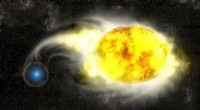
3. Plasma Ejection: The sudden release of magnetic energy creates a powerful force that propels plasma outward from the star's atmosphere. This plasma is ejected at high speeds, sometimes reaching millions of kilometers per hour, and forms structures such as solar flares or coronal mass ejections (CMEs) in the case of the Sun.
4. Radiation Emission: The energy released during magnetic reconnection also heats the surrounding plasma to extremely high temperatures. This hot plasma emits intense radiation, including X-rays, ultraviolet light, and radio waves. These emissions can be observed by telescopes and instruments designed to study space eruptions.
5. Shock Waves: The ejection of plasma during space eruptions can generate shock waves that travel outward through the star's atmosphere and beyond. These shock waves can cause further heating and compression of the plasma, contributing to the overall dynamics of the eruption.
6. Geomagnetic Storms: In the case of the Sun, particularly strong space eruptions known as coronal mass ejections can travel through interplanetary space and interact with the Earth's magnetic field. This interaction can cause geomagnetic storms, which can disrupt satellite communications, power grids, and other infrastructure on Earth.
It is worth noting that space eruptions can vary in size, intensity, and frequency depending on the star's characteristics and activity level. While they can have significant effects on the star's atmosphere and surroundings, they are also important phenomena that provide valuable insights into the behavior and dynamics of stars.