1. Event Horizon and Meissner Effect:
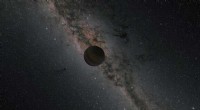
- The event horizon of a black hole is the boundary beyond which nothing, not even light, can escape.
- Superconductors exhibit a similar phenomenon called the Meissner effect. When a superconductor is cooled below its critical temperature, it expels magnetic fields from its interior, creating a region with zero magnetic field known as the Meissner state.
2. Thermodynamics:
- Black holes have associated thermodynamic properties, such as temperature and entropy.
- Superconductors also display analogous thermodynamic properties. Just as black holes have a Hawking temperature related to their quantum properties, superconductors exhibit a critical temperature below which they enter the superconducting state.
3. Quantum Gravity and Superconductivity:
- Physicists have explored possible connections between quantum gravity and superconductivity through the AdS/CFT correspondence, a theoretical framework that relates certain aspects of quantum gravity to properties of strongly interacting quantum systems.
- This framework has led to insights into the emergence of gravity from quantum matter theories, and some researchers have proposed models that draw analogies between black holes and certain quantum condensates, including superconductors.
4. Theoretical Models and Speculation:
- Some theoretical proposals have suggested that superconductivity could be an emergent phenomenon arising from specific types of quantum matter configurations, and that these could bear certain similarities to black hole physics.
- Such ideas remain highly speculative and are the subject of ongoing research in theoretical physics.
It's important to note that the parallels between black holes and superconductors are primarily mathematical analogies and theoretical explorations. There is no evidence or established physical theory directly connecting the phenomena of black holes and superconductivity in a cause-and-effect relationship. Both black holes and superconductors are fascinating and complex phenomena studied in their respective fields of astrophysics and condensed matter physics.