1. Limited Raw Materials: The raw materials required for star formation are finite, primarily hydrogen and helium gases. The supply of these gases is not infinite and can only support the formation of a certain number of stars within a given period.
2. Time Required for Stellar Evolution: Star formation is a complex and lengthy process involving gravitational collapse, nuclear fusion ignition, and the stabilization of the star's structure. These processes take time and cannot be accelerated significantly without compromising the stability and longevity of the stars formed.
3. Gravitational Feedback: As stars form within a region, their gravity can disrupt the surrounding gas clouds, leading to fragmentation and dispersal. This feedback mechanism can limit the efficiency of star formation by preventing the continuous accretion of gas onto existing protostars.
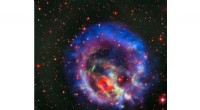
4. Supernovae and Stellar Feedback: Massive stars end their lives as supernovae, releasing enormous energy and expelling their outer layers into the surrounding space. This can disrupt nearby gas clouds and make it more difficult for new stars to form in the affected region.
5. Radiation Pressure: The intense radiation emitted by stars, especially massive ones, can exert radiation pressure on nearby gas clouds. This pressure can counteract the gravitational forces that would otherwise cause the clouds to collapse and form new stars.