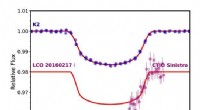
1. Gravitational Microlensing: PBHs can cause a slight distortion in the light from distant stars known as gravitational microlensing. By observing a large number of stars and monitoring for these microlensing events, it is possible to infer the presence of PBHs.
2. Gravitational Wave Detection: PBHs can emit gravitational waves when they merge with other PBHs or compact objects. Advanced gravitational wave detectors, such as LIGO and Virgo, can potentially detect these gravitational wave signals and provide information about the existence and properties of PBHs.
3. Radio Emission: PBHs can produce radio signals through various mechanisms, such as the accretion of interstellar gas and the emission of Hawking radiation. Sensitive radio telescopes can be used to detect these signals and constrain the abundance of PBHs.
4. X-ray and Gamma-ray Observations: PBHs can emit X-rays and gamma rays through the interactions between their accretion disks and the surrounding matter. X-ray and gamma-ray observatories, such as Chandra X-ray Observatory and Fermi Gamma-ray Space Telescope, can be used to search for these emissions.
5. Particle Detection: The evaporation of PBHs, known as Hawking radiation, can produce a flux of high-energy particles, including photons and neutrinos. Large-scale particle detectors, such as neutrino observatories and cosmic ray detectors, can be used to search for these high-energy particles.
6. Lunar Ranging: If PBHs are present in significant numbers, they can affect the motion of the Moon through their gravitational interactions. By precisely monitoring the lunar orbit using techniques such as Lunar Laser Ranging, it is possible to place constraints on the abundance of atom-sized PBHs.
The detection of atom-sized PBHs remains a challenging task, and no definitive evidence has been obtained so far. However, by combining observations and theoretical studies, scientists continue to refine their detection strategies and push the boundaries of our knowledge about these enigmatic objects.