Here are some key differences between black holes and dark matter:
- Black holes are extremely dense objects with a strong gravitational pull, while dark matter is thought to be a very diffuse substance that does not interact with light or other forms of electromagnetic radiation.
- Black holes can be observed directly using telescopes, while dark matter has not yet been directly observed and its existence is inferred from its gravitational effects on other objects.
- The mass of a black hole is concentrated at a single point, while dark matter is thought to be distributed throughout the universe.
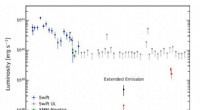
- Black holes emit radiation in the form of X-rays and gamma rays, while dark matter does not emit any detectable radiation.
- Black holes have a definite size, while the size of dark matter halos is not well understood.