The new theory, published in the journal Nature Astronomy, suggests that the observed brightness of these objects can be attributed to the presence of a corona of plasma surrounding the black hole or neutron star. This corona is heated to extremely high temperatures due to the gravitational interactions with the black hole or neutron star, emitting X-rays and gamma rays.
Previously, it was thought that these objects primarily emitted radiation through thermal processes, such as the emission of thermal photons from the surface. However, the new theory suggests that non-thermal processes, such as the acceleration of particles in the corona, play a crucial role in producing the observed brightness.
The presence of a corona surrounding black holes and neutron stars is supported by observations from telescopes, including NASA's Chandra X-ray Observatory and the European Space Agency's XMM-Newton satellite. These observations have revealed the existence of X-ray and gamma-ray emission from these objects, which cannot be fully explained by thermal processes alone.
The corona is heated to high temperatures through a process called magnetic reconnection, where magnetic fields interact and release vast amounts of energy. This process generates a hot, diffuse plasma that emits radiation in the X-ray and gamma-ray bands. The energy for magnetic reconnection comes from the rotational energy of the black hole or neutron star.
The theory has implications for understanding the physics of black holes and neutron stars and the processes that drive their emission. It could also help explain the observed brightness of other compact objects, such as white dwarfs and active galactic nuclei.
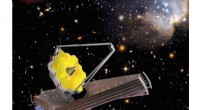
Further observations are needed to validate the new theory and gain a deeper understanding of the processes responsible for the brightness of black holes and neutron stars. The upcoming launches of next-generation telescopes, such as the James Webb Space Telescope and the Athena X-ray Observatory, are expected to provide valuable insights into these fascinating objects.