1. Solar Energetic Particles (SEPs): These particles originate from the Sun and are emitted during solar flares and coronal mass ejections (CMEs). They are composed of highly charged atomic nuclei and electrons accelerated to very high energies. SEPs can pose radiation hazards to astronauts, electronic components in spacecraft, and disturb Earth's magnetosphere, leading to geomagnetic storms.
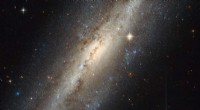
2. Galactic Cosmic Rays (GCRs): These particles originate from outside our solar system and are believed to originate from supernova explosions and other high-energy astrophysical events in distant galaxies. GCRs are composed of atomic nuclei, including protons, helium nuclei, and heavier elements, and can have extremely high energies. They pose a continuous radiation hazard to astronauts and can cause damage to spacecraft electronics.
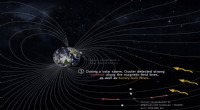
3. Trapped Radiation Belts: Earth's magnetic field traps high-energy charged particles, creating the Van Allen radiation belts. These belts consist of two main regions: the inner and outer belts. The inner belt primarily contains high-energy protons, while the outer belt contains electrons. The trapped particles can pose risks to satellites and astronauts passing through these regions.
4. High-Energy Particles in Earth's Atmosphere: Certain particles can be accelerated to high energies within Earth's atmosphere. Cosmic rays interacting with the upper atmosphere can generate secondary particles, including neutrons and protons, which can pose radiation risks to aircraft flying at high altitudes.
It is important to monitor and understand these sources of high-energy particles to mitigate their potential hazards and ensure the safety of astronauts, space missions, and critical infrastructure affected by space weather.