The James Web Space Telescope (JWST) is a space telescope under development and construction by NASA, the European Space Agency (ESA) and the Canadian Space Agency (CSA) It will replace the aging Hubble Space Telescope as NASA's primary space observatory.
How JWST Works:
JWST primarily works by collecting and analyzing light from deep space to observe and study various astronomical objects and phenomena. Here is a general overview of how it operates:
1. Orbit and Position:
- JWST orbits the Sun at a distance known as the second Lagrange point (L2), which is approximately 1.5 million kilometers (0.93 million miles) from Earth.
- This allows it to avoid interference from Earth's atmosphere and provides a stable thermal environment for its sensitive instruments.
2. Light Collection:
- JWST's main instrument is a 6.5-meter (21.3-foot) primary mirror made of gold-plated beryllium. This large mirror collects and focuses infrared light from distant objects in space.
- Infrared light is chosen because it can penetrate through interstellar dust and gas, allowing JWST to observe objects previously hidden from Hubble.
3. Mirrors and Optics:
- JWST's mirror system consists of 18 hexagonal segments that work together as a single large mirror.
- These segments are precisely aligned and controlled by actuators to focus the collected light precisely onto the science instruments.
4. Cooling System:
- JWST operates at extremely cold temperatures to minimize thermal noise and ensure the sensitivity of its instruments.
- A five-layer sunshield blocks the heat from the Sun, Earth, and Moon, allowing the telescope to cool down to approximately -233 degrees Celsius (-387 degrees Fahrenheit).
- This enables JWST to detect faint infrared signals from distant objects.
5. Scientific Instrumentation:
- JWST is equipped with four main scientific instruments:
- Near-Infrared Camera (NIRCam): Captures visible and infrared images.
- Mid-Infrared Instrument (MIRI): Observes mid-infrared light and provides imaging and spectroscopic capabilities.
- Near-Infrared Spectrograph (NIRSpec): Analyzes the chemical composition and physical properties of objects by splitting light into its component wavelengths.
- Tunable Filter Imager (TFI): Produces images in specific narrow wavelength ranges.
6. Data Processing:
- JWST collects enormous amounts of data, which are then transmitted to Earth.
- Ground stations receive the data and process it to produce images, spectra, and other scientific information.
7. Pointing and Control:
- JWST's pointing system ensures that it can precisely aim and track astronomical targets.
- The telescope uses a combination of reaction wheels, thrusters, and star trackers to maintain its orientation.
8. Communication:
- JWST communicates with Earth through the Deep Space Network (DSN), a global network of radio antennas used for spacecraft communications.
9. Science Goals:
- JWST's primary scientific objectives include:
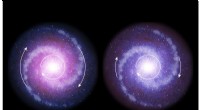
- Observing the early universe and the formation of the first galaxies.
- Studying the evolution of galaxies and stars.
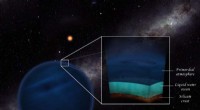
- Discovering exoplanets and analyzing their atmospheres.
- Investigating the composition and properties of celestial objects.
In summary, the James Webb Space Telescope is an advanced space telescope that operates in the infrared spectrum, allowing it to observe distant and faint objects in the universe. Its large primary mirror, precise instrumentation, and sophisticated cooling system enable JWST to capture detailed and groundbreaking observations that will deepen our understanding of the universe.