1. Nebula: Where Stars Begin
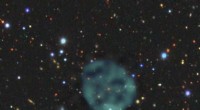
Stars originate within vast clouds of gas and dust called nebulae (singular: nebula). These cosmic nurseries are rich in hydrogen, helium, and trace amounts of heavier elements. Nebulae exist in a state of equilibrium, held together by gravitational forces.
2. Gravity Takes Hold
Minor disturbances, such as shockwaves from nearby supernovae or interactions with neighboring galaxies, can disrupt the equilibrium within a nebula. As density increases, gravitational forces start to dominate, triggering the collapse of a region within the nebula.
3. Molecular Cloud Core
As the collapsing region concentrates and becomes opaque, it's known as a molecular cloud core. Within this dense core, conditions are becoming suitable for star formation.
4. Protostar and Accretion Disk
At the heart of the collapsing molecular cloud core, gravity draws material inward, spinning faster and hotter. A central protostar emerges, accumulating mass via an accretion disk.
5. Hydrostatic Equilibrium
At some point, a delicate balance emerges between the protostar's inward pull and the outward pressure created by its increased temperature. This state of hydrostatic equilibrium marks a critical juncture in star formation.
6. Fusion Ignited: Birth of a Star
Once the protostar's core reaches about 10 million degrees Celsius, nuclear fusion begins. Protons fuse to form helium, unleashing enormous energy that counteracts the gravitational collapse. A star is born when the energy output from fusion balances the force of gravity, bringing hydrostatic equilibrium to a steadier level.
7. Classification and Stellar Evolution
The size, temperature, and color of a star depend on its mass. More massive stars are hotter and bluer, while lower-mass stars are cooler and redder. Each star then enters its unique life cycle of nuclear fusion, shaping its final fate across vast stretches of time.
From a tiny speck within a nebula to a towering beacon of fusion, the journey of star formation is both captivating and awe-inspiring. It reminds us of the intricate tapestry woven by the universe, with stars emerging as glowing gems of celestial beauty that shape our understanding of the vastness and complexity of the cosmos.