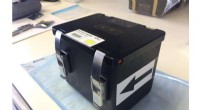
Voyager 1 and 2 are powered by radioisotope thermoelectric generators (RTGs), which use heat from decaying plutonium-238 to produce electricity. This power source is necessary because the spacecraft are so far from the Sun that solar energy is not sufficient.
The spacecraft have a variety of instruments on board for studying planets, moons, and interstellar space. These instruments include cameras, spectrometers, magnetometers, and plasma detectors.
How Voyager Works
Voyager 1 and 2 are three-axis stabilized spacecraft, which means they can point their antennas and instruments in any direction. This is important for maintaining communication with Earth and for taking measurements of the planets and moons they encounter.
The spacecraft are also equipped with thrusters for making course corrections and for slowing down their approach to planets. The thrusters are fired using commands sent from Earth.
Journey to the Outer Planets
Voyager 1 and 2 were launched in 1977 and 1979, respectively. They flew by Jupiter in 1979 and 1981, and Saturn in 1980 and 1981. Voyager 2 also flew by Uranus in 1986 and Neptune in 1989.
Beyond the Solar System
In August 2012, Voyager 1 crossed the heliopause, the boundary between the solar wind and the interstellar medium. Voyager 2 followed suit in November 2018. Both spacecraft are now traveling in interstellar space, and they are expected to continue to function for several more decades.
Voyager's Legacy
Voyager 1 and 2 have made significant contributions to our understanding of the outer planets and interstellar space. They have provided stunning images of these faraway worlds, and they have collected valuable data on their atmospheres, magnetic fields, and other features.
The Voyager mission is also a testament to human ingenuity and perseverance. It is a remarkable achievement that these two spacecraft have been able to travel so far from Earth and continue to function after more than 40 years in space.
The Future of Voyager
Voyager 1 and 2 are expected to continue to transmit data to Earth until about 2025. After that, their power sources will run out and they will no longer be able to communicate.
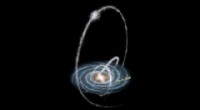
However, the Voyager spacecraft will continue their journey through interstellar space. They are on a course that will take them out of the Milky Way Galaxy and into the vast emptiness of intergalactic space.
Voyager 1 and 2 are humanity's first emissaries to the stars. Their journey is a testament to our curiosity about the universe and our desire to explore the unknown.