The Hubble Space Telescope (HST) is a joint project of NASA and the European Space Agency (ESA). It was launched on April 24, 1990, and has revolutionized our understanding of the universe.
How does the Hubble Space Telescope work?
The HST is a reflecting telescope, which means that it uses mirrors to focus light. The primary mirror is 2.4 meters (7.9 feet) in diameter and is made of glass. The secondary mirror is 0.3 meters (1.0 feet) in diameter and is also made of glass.
The light from the telescope is focused on a CCD (charge-coupled device) camera. The CCD camera is made up of millions of tiny light-sensitive elements called pixels. When light strikes a pixel, it creates an electrical charge. The amount of charge created depends on the brightness of the light.
The electrical charges from the CCD camera are sent to a computer. The computer converts the electrical charges into digital data. The digital data is then processed to create images.
What are the HST's main features?
The HST has a number of features that make it a unique and powerful telescope.
* Aperture: The HST's primary mirror is 2.4 meters (7.9 feet) in diameter. This makes it one of the largest telescopes in the world.
* Orbit: The HST orbits Earth at an altitude of about 547 kilometers (340 miles). This gives it a clear view of the universe, free from the distortions caused by Earth's atmosphere.
* Instruments: The HST is equipped with a variety of instruments, including cameras, spectrometers, and photometers. These instruments allow the HST to study the universe in a variety of wavelengths, from visible light to ultraviolet light.
What are some of the HST's most famous discoveries?
The HST has made a number of important discoveries, including:
* The expansion of the universe: The HST has helped to measure the rate at which the universe is expanding. This measurement has led to the development of the Big Bang theory, which is the leading explanation for the origin of the universe.
* Black holes: The HST has provided evidence for the existence of black holes, which are regions of space where gravity is so strong that nothing, not even light, can escape.
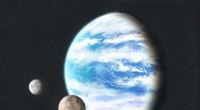
* Planets around other stars: The HST has discovered planets orbiting stars other than the Sun. These exoplanets are providing scientists with new insights into the formation and evolution of planetary systems.
The HST has revolutionized our understanding of the universe and continues to make new discoveries. It is a testament to the ingenuity and dedication of the scientists and engineers who made it possible.