The Moon is thought to have formed about 4.5 billion years ago, shortly after the Earth. It is believed that a Mars-sized protoplanet called Theia collided with the Earth, and the debris from this collision formed the Moon.
The Moon's Structure
The Moon is a solid, rocky body with a thin atmosphere. It has a diameter of about 3,474 kilometers, which is about one-fourth the diameter of the Earth. The Moon's crust is made up of mostly oxygen, silicon, and magnesium. The Moon's mantle is made up of mostly iron and magnesium. The Moon's core is made up of mostly iron.
The Moon's Surface
The Moon's surface is covered with craters, which are caused by impacts from asteroids and comets. The Moon's surface is also covered with maria, which are large, dark plains that are filled with lava. The Moon's maria were formed by volcanic eruptions that occurred billions of years ago.
The Moon's Atmosphere
The Moon's atmosphere is very thin, and it is made up of mostly oxygen, sodium, and potassium. The Moon's atmosphere is so thin that it does not provide any protection from the Sun's radiation.
The Moon's Orbit
The Moon orbits the Earth at a distance of about 384,400 kilometers. The Moon takes about 27 days to complete one orbit of the Earth. The Moon's orbit is not perfectly circular, but rather elliptical. This means that the Moon's distance from the Earth varies throughout its orbit.
The Moon's Tides
The Moon's gravity causes the tides on Earth. The tides are caused by the difference in the gravitational force between the Moon and the Earth at different points on the Earth's surface. The tides are highest when the Moon is closest to the Earth and lowest when the Moon is furthest from the Earth.
The Moon's Phases
The Moon's phases are caused by the changing angle between the Sun, the Moon, and the Earth. As the Moon orbits the Earth, the amount of sunlight that reflects off of the Moon changes. This causes the Moon to appear to change shape, from a full Moon to a new Moon and back again.
The Moon's Eclipses
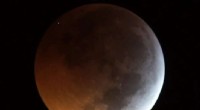
A lunar eclipse occurs when the Earth passes between the Sun and the Moon, blocking the Sun's light from reaching the Moon. A lunar eclipse can only occur during a full Moon. A solar eclipse occurs when the Moon passes between the Sun and the Earth, blocking the Sun's light from reaching the Earth. A solar eclipse can only occur during a new Moon.
The Moon's Exploration
The Moon has been explored by humans and robots for centuries. The first human to set foot on the Moon was Neil Armstrong in 1969. Since then, there have been six other manned missions to the Moon. Robots have also explored the Moon, and they have sent back valuable data about the Moon's surface, atmosphere, and composition.
The Future of Moon Exploration
The Moon is a potential destination for future human exploration. There are plans to build a permanent human base on the Moon, and there is also interest in mining the Moon's resources. The Moon could also be used as a staging point for missions to Mars and other planets.