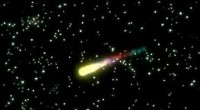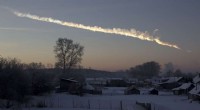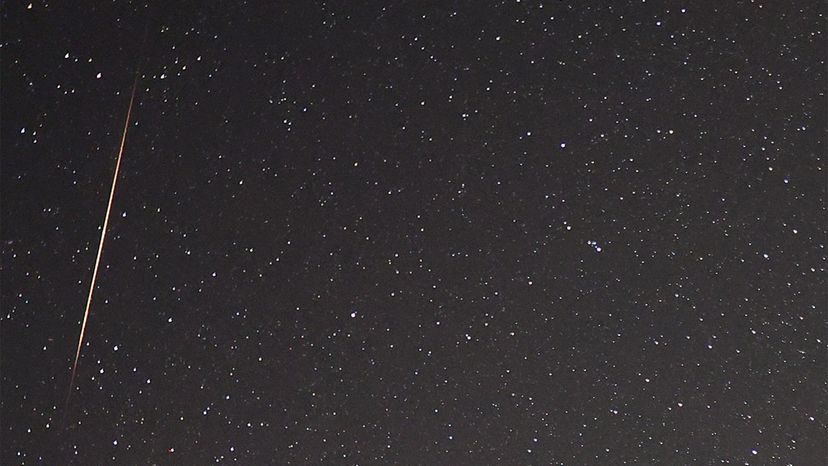
While 'shooting star' may be a misnomer, there's no denying the magic of seeing a bright object arc across the night sky. When small objects hit Earth's atmosphere, we see these meteors light up as shooting stars as they burn up on their fiery passage.
Enter the Tau Herculids, a new — and short-lived — meteor shower. This meteor shower was promised to be either be one for the history books or not visible at all — an interesting dichotomy for a science like astronomy which is usually more certain about events like meteor showers. It turned out to produced a beautiful display of meteor activity, but not quite the major meteor storm some were hoping to see.
ContentsMeteor showers are a debris record of astronomic life in our solar system. Each time Earth passes through a field of debris and a meteor shower occurs, it's a reminder that there are many objects in our solar system, moving around and dancing in sync without stepping on each others' toes. They occur on every celestial body as the planets, moons, asteroids and comets move in their celestial dance.
As Earth crosses the paths of debris, that debris enters the atmosphere at a higher frequency than one-off objects entering the atmosphere from space. Watching these spectacular shows doesn't require anything more than the right timing — they're visible to the naked eye.
What makes astronomers excited about the Tau Herculids is that it is a new meteor shower.
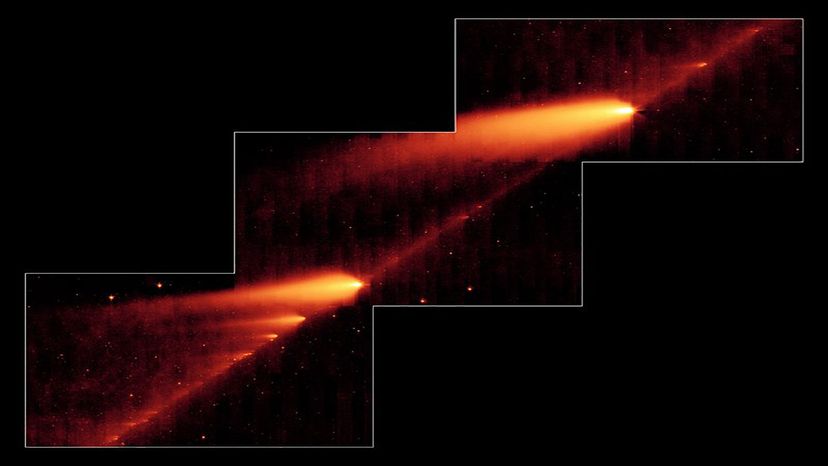
On May 2, 1930, German observers Arnold Schwassmann and Arno Arthur Wachmann discovered a comet that was named 73P/Schwassmann-Wachmann after them. Also called "SW3," this comet has an orbital period of 5.4 years — but is so faint that it wasn't observed again until the 1970s.
Through the mid-1990s, SW3 looked like most other comets, until astronomers realized it had become about 600 times brighter than previous observations. This was due to the fact that SW3 had broken up at some point during its orbit, leaving debris in its own path through the solar system. By 2006, astronomers counted almost 70 pieces of SW3, and it has likely continued to break up in the 16 years since.
Interestingly, because SW3 has had such a dynamic history in the time we've known about it, astronomers weren't sure what would happen on the night the Tau Herculids actually peaked.
"This is going to be an all or nothing event," said Bill Cooke from NASA's Meteoroid Environment Office, in a press release. "If the debris from SW3 was traveling more than 220 miles per hour [354 kilometers per hour] when it separated from the comet, we might see a nice meteor shower. If the debris had slower ejection speeds, then nothing will make it to Earth and there will be no meteors from this comet."
As it turned out, the people of Earth were treated to a pretty nice meteor shower, which may not have lived up to its hype, but certainly did not disappoint.
Now That's InterestingWhile SW3 has makes its orbit every 5.4 years, the unique shape of its orbit only brings it near Earth every 16 years – hence the gap between our last meaningful observations in 2006 and this month's potential meteor shower in 2022.
Originally Published: May 25, 2022