Did Charles Darwin's theory of evolution put his world at odds with God? What about Richard Dawkins, evolutionary biologist and self-proclaimed atheist who openly speaks against religion?
If many scientific visionaries aren't religious, does that mean they're atheist?
Sure, many marquee scientists haven't counted themselves among the clergy, but hold on a second before hustling them all into the same group. It all boils down to definitions. Depending on your interpretation, atheism may equate to lacking a belief in God or a more firm belief that God doesn't exist [source: University of Cambridge].
Agnosticism muddies the (holy) waters even more. In general, agnosticism means a person neither believes in nor denies God's existence -- it insinuates not knowing for sure either way [source: Stanford Encyclopedia of Philosophy]. A lot of ridiculously bright folks, like Darwin, have been mislabeled atheist when in fact they're agnostic.
More than 45 years after Darwin journeyed to the Galapagos to peer at hummingbirds, the naturalist shed light on his religious beliefs in a private journal. He wrote about lacking knowledge to know for sure if there's a higher being: "The mystery of the beginning of all things is insoluble to us; and I for one must be content to remain an Agnostic" [source: PBS].
Other self-described agnostics such as physics and astronomy experts Stephen Hawking, Albert Einstein and Carl Sagan are sometimes mislabeled atheists. These minds have challenged traditional religions and God's role in everyday life, but may not have rejected God outright.
Here's Sagan: " ... A general problem with much of Western theology in my view is that the God portrayed is too small. It is a god of a tiny world and not a god of a galaxy, much less of a universe."
 If the stuffed monkey didn't already give it away, that's Jane Goodall, a scientist who has made room for both science and religion in her life.
Jemal Countess/WireImage/Getty Images
If the stuffed monkey didn't already give it away, that's Jane Goodall, a scientist who has made room for both science and religion in her life.
Jemal Countess/WireImage/Getty ImagesAnd there are the believers, too. Francis Collins, who led the Human Genome Project, identifies himself as Christian. In an interview with PBS, the man who helped to discover the genes for Huntington's disease and cystic fibrosis firmly rejected the idea that science and faith must collide. Present-day primatology pioneer Jane Goodall has used her Christian upbringing to promote religious tolerance. (As a teenager, a passionate crush on a local man of the cloth led Goodall to church as many as three times in a Sunday [source: Academy of Achievement]). Reaching farther back into history, astronomer Galileo Galilei practiced Catholicism and bundled up daughters Virginia and Livia for the convent for life.
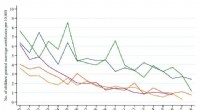
Still there's some truth to the atheist-scientist misconception -- scientists in the United States are more likely to not believe in God when compared to nonscientists [source: The Pew Research Center]. Here are the numbers from one 2009 Pew Research Center survey:
Why does a flock of the science faithful not subscribe to God?
Well, scientists often grapple with the lack of physical proof for a higher being. There's also the idea that the world's most momentous discoveries -- such as evidence for the massive explosion called the big bang -- paint a different picture of the world's origins when compared to certain religious explanations.
Whether scientists grace your local place of worship or believe their work replaces the need for a higher being, it's no longer orthodox to label these brilliant minds as atheist.