In this article we'll look at why there is a Marine Corps, how it's structured, the history behind the Corps, how to join, life inside, and leaving.
Marine Corps Purpose
The modern Marine Corps is focused on “force projection;” specifically, the projection of U.S. military power from Navy ships onto hostile landing areas. Marines have spearheaded amphibious assaults and gained footholds for American troops throughout U.S. history. They secure or set up advance bases from which the Army and Air Force can operate. In addition, the Marines can be used for “other duties as the President may direct,” according to the 1834 Marine Corps Law. The Marines operate in a state of readiness for combat unmatched by units in other military branches. A Marine unit has everything it needs to leap right into combat, including logistical support and close air support. Plus, the Marines keep units stationed on Navy ships that are “on float” around the world. That puts them closer to potential trouble spots than troops stationed in the United States
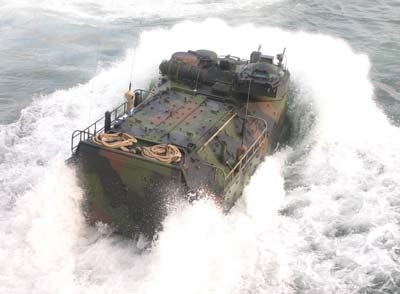
The “as the President may direct” portion of the Marine Corps’ job description puts them in quite a few non-amphibious situations, including combat far from beaches, running security detail on some Navy ships (originally the Corps’ primary function), protecting U.S. embassies as well as the White House, and transporting the president and vice president in Marine helicopters.

The Marines are divided into four separate groups:
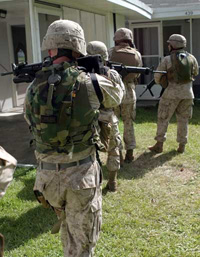

The Corps also places a heavy emphasis on decentralization of command. Junior officers are given greater responsibility and decision-making abilities than soldiers of the same rank in other armed forces. The general rule is: “Follow the spirit of an order (from higher ranking officers), even if you don’t follow the order to the letter.” In other words, if a Marine unit is ordered to get something done, the individual commander within that unit has the freedom to decide the best way to do it.

In 1798, the Marine Corps was reestablished to help combat pirates of the Barbary Coast who were attacking U.S. merchant ships in the Mediterranean region. In those early years, the Marines acted as “naval infantry,” working aboard Navy ships and going ashore or onto enemy ships to fight when necessary. They also served as a security and police force on Navy ships. At the time, many Navy sailors were non-professionals who had been conscripted into service. The possibility of mutiny was very real. The Marines on board were often positioned in between the crew quarters and the officers. While at sea, the Marines were under the command of the Navy. When they went ashore, they were under Army command.

The pirate issue came to a head when the African nation of Tripoli declared war on the United States in 1801. A handful of Marines with a large group of mercenaries marched overland to the city of Derna and captured it after several hours of hard fighting. The incident was immortalized in the Marines’ Hymn.
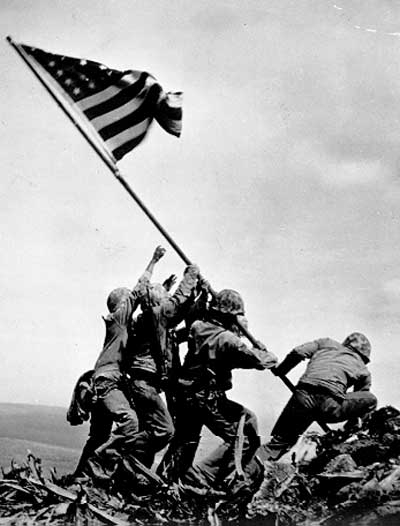
Marines have seen action to some extent in every U.S. war. They saw heavy fighting in World War I, but it was in World War II that they endured some of the toughest battles ever fought by American soldiers. The Pacific Theater of the war required the conquering of dozens of small islands, airfields and bases that were held by entrenched Japanese forces. Island by island, the Marines ground out costly victories, losing thousands of men for each tiny atoll they took. It was here that they perfected the art of the amphibious assault. On a small island called Iwo Jima, the Marines’ victory was frozen in time by a famous photograph showing Marines struggling to raise an American flag. They eventually took the Philippines and landed in Japan and China to accept the surrender of Japanese soldiers. Almost 20,000 Marines died during the course of the war (Lawliss, 57).
The Marines were no less valuable (and bloodied) in Korea and Vietnam, and spearheaded several major assaults through Iraqi lines during Operation Desert Storm. [Source: The Marines]. During the Iraq War, Marines were in the thick of daily battles with insurgents in Fallujah, Samarra and Sadr City, and are responsible for patrolling and peacekeeping in that region. [Source: The Washington Post].
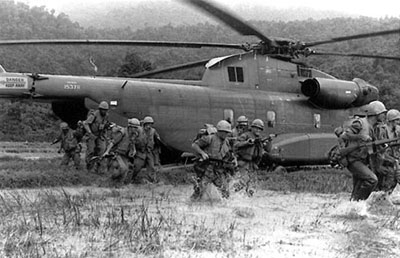
In the future, the Marines plan to constantly examine and adjust their doctrine to improve their ability to deal with modern warfare. In the age of IEDs and roadside bombs, Marines are looking toward cultural training, decentralized decision-making and special anti-terrorism units to combat 21st century warfare tactics [Source: Marines Magazine].
Joining the Marines
Those who wish to become an officer in the Marines can apply for Officer Candidates School, which offers a grueling training regimen and an officer’s commission upon graduation. Potential Marine Corps officers can also attend the Naval Academy, a four-year undergraduate institution with a very rigorous physical and academic program. A Congressional nomination is required to apply.
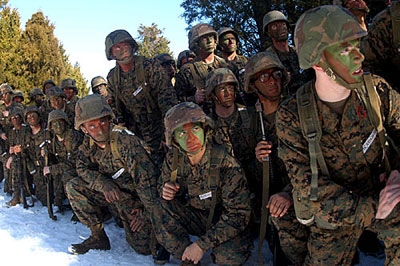
Most Marines, however, begin their military career in Marine Corps boot camp at Parris Island, South Carolina or at the Marine Corps Recruit Depot in San Diego, California. The 12-week training program is, by all accounts, more difficult than most armed services in the United States or elsewhere. Recruits are united by their loathing (and later respect) for a hard-nosed and leather-lunged Drill Instructor, who will literally drill Marine Corps values and skills into them. The Marine Corps training matrix provides a detailed look at Marine boot camp. All Marines are extensively trained in marksmanship – another part of Marine doctrine states that every Marine is a rifleman, from the front lines to the cooks and clerks.

Following graduation, Marines get a ten-day leave and then attend additional training in a specific area or career track. There are restrictions and prerequisites for many career tracks and specialties, so not every Marine gets to choose exactly what he or she wants to do. They will then be assigned to a base or airfield. The Marine’s preference for deployment is noted, but the priority for base assignment is where the Corps needs you, not where you’d like to live.
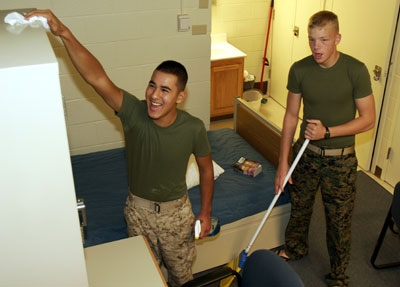
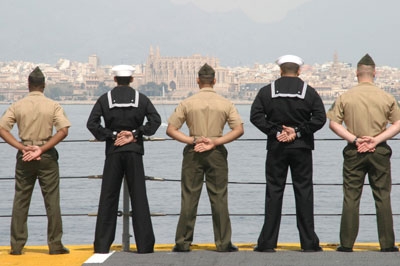
Many Marines will spend portions of their active duty stationed aboard Navy vessels. For them, time on a Navy deployment (lasting roughly six months) is much the same as it is for the sailors themselves – cramped, busy and at times rather boring. Marines remain under the command of their officers while on board, but everyone on a Navy vessel is under the command of the ship’s captain.
During wartime, Marines experience an interesting range of hardships. The Iraq War offers the constant fear of roadside or suicide bombings and the uncertainty as to whether any given Iraqi citizen is an innocent civilian or an insurgent. They are far from home, facing death on a daily basis and watching their close friends get killed or wounded – in other words, life for a Marine hasn’t changed much in 200 years.
Leaving the Marines
As members of a U.S. military organization, all Marine Corps personnel are subject to the Uniform Code of Military Justice. Dismissal from the Marines can take a variety of forms, from an honorable discharge to a court martial, depending on the circumstances surrounding the dismissal. See How the Army Works for a full explanation.
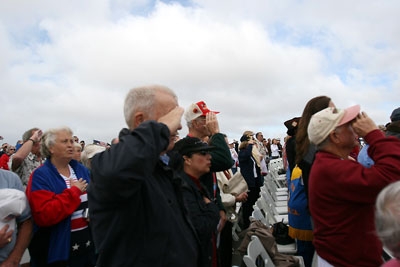
Marine Corps veterans and retirees are eligible for a host of benefits ranging from burial in state cemeteries, health and life insurance, low-interest loans for mortgages or small businesses, and veterans’ health care. The full suite of benefits available may depend on the nature of the veteran’s dismissal – usually an honorable discharge or retirement is necessary for access to all benefits. A search for answers to specific questions about veterans’ benefits begins here: The National Archives.
For lots more information on the Marine Corps and related topics, check out the links on the next page.
Related HowStuffWorks Articles
More Great Links
Sources