Chances are you've eaten phytochemicals. Don't be alarmed -- they're not toxic agents produced by some huge chemical company, as the name might suggest. Phytochemicals are natural compounds found in the fruits and vegetables we eat (or should eat) every day.
Photo courtesy CDC, Morguefile, Free Images
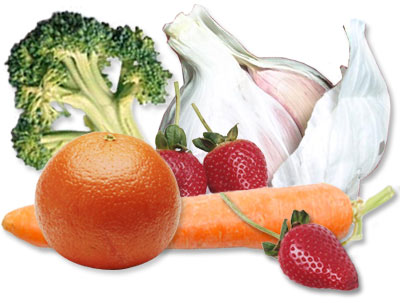
Phytochemicals help give an orange its orange color and make a strawberry red. More importantly, they may protect us from some of the most deadly diseases that threaten us -- diseases such as cancer and heart disease. As the research on phytochemicals' health benefits mounts, many companies are jumping on the bandwagon and producing a variety of supplements containing them.
In this article, we will look at the wide range of phytochemicals contained in the foods we eat every day, learn how they can improve our health and find out how safe and effective they really are.
Contents
What are Phytochemicals?
The Phytochemicals
Phytochemical Reference Table
Are There Any Dangers to Phytochemicals?
What are Phytochemicals?
Phytochemicals are natural compounds found in fruits and vegetables. They are substances that don't fall within any other categories -- they are not vitamins, proteins, carbohydrates, fats or minerals. Although they are not nutrients -- that is, necessary for sustaining life -- phytochemicals are beneficial to our health.
Each type of fruit or vegetable may contain hundreds of phytochemicals. An orange alone may contain 170 or more different phytochemicals.
Phytochemicals originated to help plants survive in an often hostile environment. When the Earth was young, there was very little free oxygen in the atmosphere. Plants, which take in carbon dioxide and release oxygen, eventually increased the oxygen composition. But by doing so, they polluted their own environment. To protect themselves from the highly reactive oxygen, plants developed antioxidant compounds, including phytochemicals. Today, thanks to these antioxidants, plants can survive -- and thrive -- in our oxygen-rich environment. Phytochemicals also protect plants against bacteria, fungi, viruses and cell damage.
The same phytochemicals that protect plants also help the humans who eat them. Researchers know that phytochemicals have antioxidant properties (meaning that they protect against substances called "free radicals" which can damage healthy cells -- see HealthCheck Systems: Understanding Free Radicals and Antioxidants to learn more). Scientists are also researching additional benefits:
Phytochemicals appear to protect against arterosclerosis -- the build up of fatty plaque on the artery walls that can increase the risk of heart attack and stroke.
Phytochemicals appear to protect against certain types of cancers.
But it remains uncertain how phytochemicals work and how much of them we need to eat to get the most benefit.
The Many Colors of Phytochemicals
Photo courtesy CDC, Morguefile
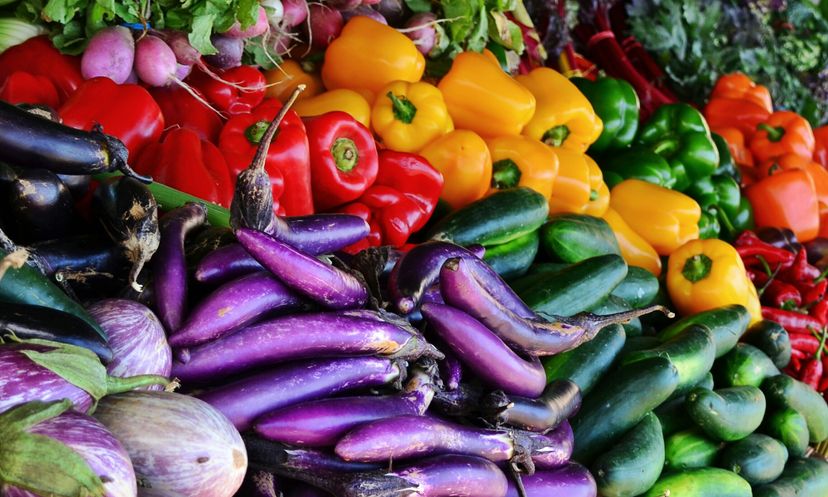
Phytochemicals not only improve our health -- they also improve our enjoyment of food by painting the fruits and vegetables we eat in a rainbow of colors.
There are almost 2,000 different plant pigments in the foods we eat. Anthocyanins give strawberries, cherries, cranberries and raspberries their rich red color. Carotenoids give carrots their characteristic orange hue.
The Phytochemicals
There are hundreds -- maybe even thousands -- of different phytochemicals contained in fruits and vegetables. Here's what some of them can do for your body:
Photo courtesy Morguefile
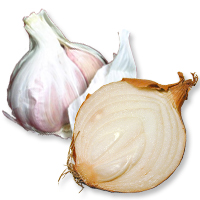
Allium (plant sulfurs), contained in onions and garlic, has been under investigation for its potential to reduce cholesterol levels and protect against heart disease. Studies have consistently shown that people who eat garlic have lower levels of LDL cholesterol (the "bad" form of cholesterol that contributes to the plaque build-up in atherosclerosis) than people who do not eat garlic. But garlic can also cause some unwanted side effects, such as bad breath, abdominal pain and flatulence. Also, cooking garlic may reduce some of its benefits.
Ellegic acid, found in berries, may prevent healthy cells from turning cancerous. It may also protect the brain as it ages.
Flavonoids are a part of a phytochemical family called polyphenols. There are more than 4,000 different flavonoids. The major categories of flavonoids are: flavones, flavonols, isoflavones, anthocyanins and catechins. Flavonoids are found in cranberries, onions, broccoli, kale, celery, soybeans, tomatoes, eggplant, cherries, apples, cranberries and tea. Red wine and grape juice contain a high level of phenolic flavonoids. Studies have shown that flavonoids can fight heart disease, slow cancer tumor growth, prevent blood clots, reduce inflammation and act as antioxidants. But in high doses, some flavonoids can cause serious gastrointestinal or allergic problems.
Indoles are found in the cruciferous vegetables, including broccoli, cabbage, Brussels sprouts, cauliflower, kale, bok choy and turnips. Their primary benefit appears to be in protecting against certain forms of cancers. They may counteract carcinogens (cancer-causing agents) in the body, and they may play a role in blocking the growth of new prostate and breast cancer cells.
Isoflavones (or phytoestrogens) are a type of flavonoid similar to the female hormone estrogen. They are found primarily in soy, but also in grains, berries, seeds and certain vegetables (such as chickpeas). Like estrogen, isoflavones can improve bone density and lower cholesterol levels, as well as reduce some of the symptoms of menopause. They may also protect against hormone-driven forms of cancer, such as prostate and breast cancer.
Plant sterols, including sitosterol, stigmasterol and campesterol, have been investigated for their ability to lower cholesterol. A derivative of sitosterol is added to some cholesterol-lowering margarines and salad dressings.
The French Paradox
In French culture, it is common to dine on rich cheeses, cream sauces and pastries. Yet they have lower heart-disease rates than Americans. How can that be? The clue, says researchers, may lie in what the French drink with their rich meals -- namely, red wine. Phenolics in red wine have been found in studies to inhibit the production of "bad" LDL cholesterol. Too much LDL cholesterol can lead to the build up of fatty plaque in blood vessel walls, increasing the risk of a heart attack. Researchers also believe that phenolics boost "good" HDL cholesterol, which protects the heart.
Phytochemical Reference Table
Each different colored vegetable or fruit contains certain types of phytochemicals. If you're looking for a particular vegetable that isn't here, look up a similarly colored food -- chances are, it contains the same types of phytochemical. For instance, kale has the same types of phytochemicals as broccoli.
FoodPhytochemicalsBenefitsApplesFlavonoidsProtect against cancer, lower cholesterolBeansFlavonoids (saponins)Protect against cancer, lower cholesterolBerriesEllagic acidPrevent abnormal cellular changes that can lead to cancerBroccoliIndoles, isothiocyanatesProtect against cancer, heart disease and strokeCarrotsBeta-caroteneAntioxidantCitrus fruitsFlavonoids (limonene)Antioxidant, inhibit tumor formation, decrease inflammationFlaxseedIsoflavonesProtect against cancer, lower cholesterolGarlicAllium (allyl sulfides)Protect against certain cancers and heart disease, boost the immune systemGrainsIsoflavonesProtect against cancer, lower cholesterolRed grapes (and wine)Flavonoids (quercitin)Protect against cancer and heart diseaseOnionsAllium (allyl sulfides)Protect against certain cancers and heart disease, boost the immune systemSweet potatoesBeta-caroteneAntioxidantSoy (soybeans)IsoflavonesProtect against cancer and heart disease, strengthen bonesTeaFlavonoids (quercitin)Protect against cancer and heart diseaseTomatoesFlavonoidsProtect against cancer, fight infection
Are There Any Dangers to Phytochemicals?
Although there isn't a lot of research to date on phytochemicals, experts say that they are generally healthy and safe when eaten as part of a balanced diet containing a wide range of fruits and vegetables. What raises concern is when they are ingredients in nutritional supplements, which are not regulated by the Food and Drug Administration.
Supplements cannot begin to replicate the wide variety of phytochemicals that occur naturally in foods; and in high concentrations, they might actually be dangerous. Certain phytochemicals in supplements have in fact been found to contribute to cancer cell growth. Beta-carotene, although it can be beneficial when taken naturally, has been found to increase the risk of lung cancer in male smokers when taken in a high-dose supplement. Some flavonoids can cause serious gastrointestinal or allergic problems when taken in high doses.
How Much Should You Eat?
The government's new dietary guidelines suggest that adults who are on a 2,000-calorie-a-day diet eat at least two cups of fruit and two and a half cups of vegetables every day. Experts say the deeper the color of the fruit or vegetable, the more protective phytonutrients it contains. And don't forget the whole grains -- they also contain a range of phytonutrients.
For more information on phytochemicals and related topics, check out the links on the next page.
Lots More Information
Related Articles
How Antioxidants Work
How B Vitamins Work
How Cancer Works
How Food Works
How Heart Disease Works
How Organic Food Works
How Vitamin C Works
More Great Links
Food and Nutrition Information Center
National Institutes of Health: Office of Dietary Supplements
5 A Day for Better Health: The Power of Phytochemicals
USDA Phytonutrient Laboratory
U.S. Food and Drug Administration: Dietary Supplements
Books
"The Importance of Good Nutrition, Herbs and Phytochemicals: For Your Health, Good Looks and Longevity" by Getty T. Ambau
"PowerFoods: Good Food, Good Health with Phytochemicals, Nature's Own Energy Boosters" by Stephanie Beling
"Designing Your Life With Designer Foods: The Facts About Phytochemicals" by Neecie Moore
"Eat to Heal: The Phytochemical Diet and Nutrition Plan" by Kristine M. Napier
Sources
American Heart Association, Phytochemicals and Cardiovascular Disease.
"Antioxidants May be Responsible for the 'French Paradox." Nutrition Research Newsletter, March 1993.
Craig, Winston J., Ph.D.Phytochemicals: Guardians of Our Health. Vegetarian Nutrition.
Webb, Densie. Phytonutrients: The hidden keys to disease prevention, good health. Environmental Nutrition, January 2003, Volume 26, page 1.
Hackman, Robert. "Flavonoids and the French Paradox - Unhealthy-living French Have Low Rate of Heart Attacks." USA Today, September 1998.
Howard, Barbara V., Ph.D., and David Kritchevsky, Ph.D. "Phytochemicals and Cardiovascular Disease," Circulation 1997; 95:2591.
National Cancer Institute, The Power of Phytochemicals.
New York Methodist Hospital, What are Important Foods?
Phytochemicals - Vitamins of the Future? Ohio State University Extension Fact Sheet.
The Phytochemical Collection, Florida State University.
What are Vitamins, Carotenoids, and Phytochemicals?